Thailand offers something for everyone. The capital, Bangkok, is alive with commerce and street-bustle nearly every hour of the day and night. Whether in big cities, the country or on a pristine beach, Thailand offers business and leisure travelers a safe, friendly atmosphere full of possibilities. Indeed, one reason Thailand is among the most visited countries in Asia (more than 22 million visitors annually) is because of its accessibility and extensive tourism infrastructure.
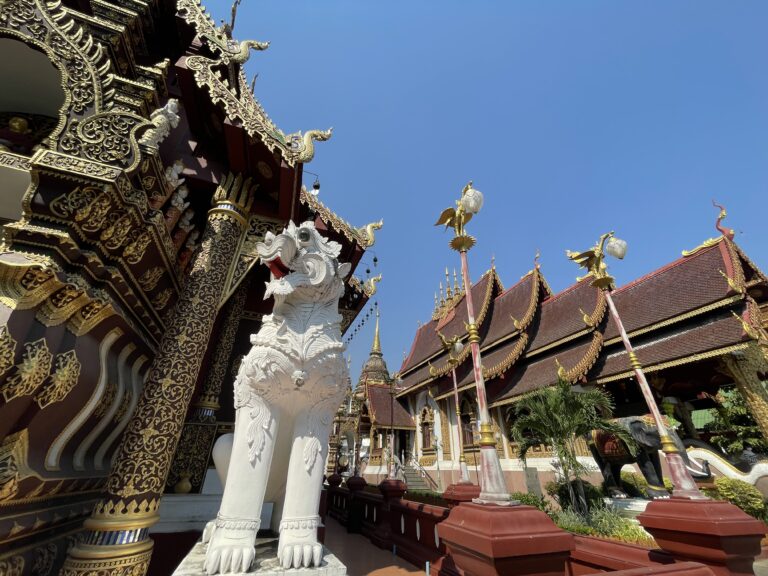
Thailand has fabulous architecture, diverse hill-tribe villages, ancient ruins, beautiful islands, excellent shopping and all the amenities as well. The balance between comfort and excitement is up to you: Stay at a five-star hotel or trek through the jungles; eat at gourmet buffets or buy fruit from local vendors; shop in glitzy malls or wander through outdoor markets. Thailand offers a curious mix of the ultramodern and the simply delightful.
The tsunamis that struck Southeast Asia in December 2004 dealt a serious blow to Thailand's western coast. The hardest-hit regions were Phang-Nga, Phuket and Krabi provinces, including popular resort areas in Phuket and Phi Phi Island. The area has fully recovered, however, and is again attracting hordes of visitors.
Geography
The center of Thailand consists of flat plains no more than a few feet/meters above sea level, watered by the Chao Phraya River and a number of smaller rivers and canals. There are mountains in the north stretching southward along the border with Myanmar, high plains in the east, and mountains and jungle covering the peninsula Thailand shares with Malaysia. History
The first true Thai kingdom was established in AD 1238, though the region had been settled since 3600 BC. The ensuing two centuries are known as the Sukhothai period, a kind of Golden Age when Thais made great contributions to writing and Theravada Buddhism and generally expanded the empire.
Though it was occasionally dominated for periods by its Southeast Asian neighbors, Thailand (or Siam, as it was called then) was the only country in the region not colonized by Europeans. The ruins of Sukhothai and other ancient Thai kingdoms are well-preserved today. The remains of these great cities date from vastly different time periods, and each is unique. A visit to at least one is well worth it.
Modern Thai history begins with the revolution of 1932, which shifted power from the king to a coalition of military and elected officials. In 1939, the official name changed from Siam to Thailand, meaning "land of the free." Despite its loss of power, however, the monarchy continues to exert enormous influence on Thai people. King Rama IX was the longest-reigning monarch in Thai history and was beloved by nearly everyone. He died 13 October 2016 and was succeeded by his son, Maha Vajiralongkorn.
Royal birthdays are treated as national holidays, and pictures of the king (featured on nearly all Thai money) and queen can be found in most homes and on billboards around the country. The king's anthem plays before the start of every movie, and the audience respectfully stands.
Snapshot
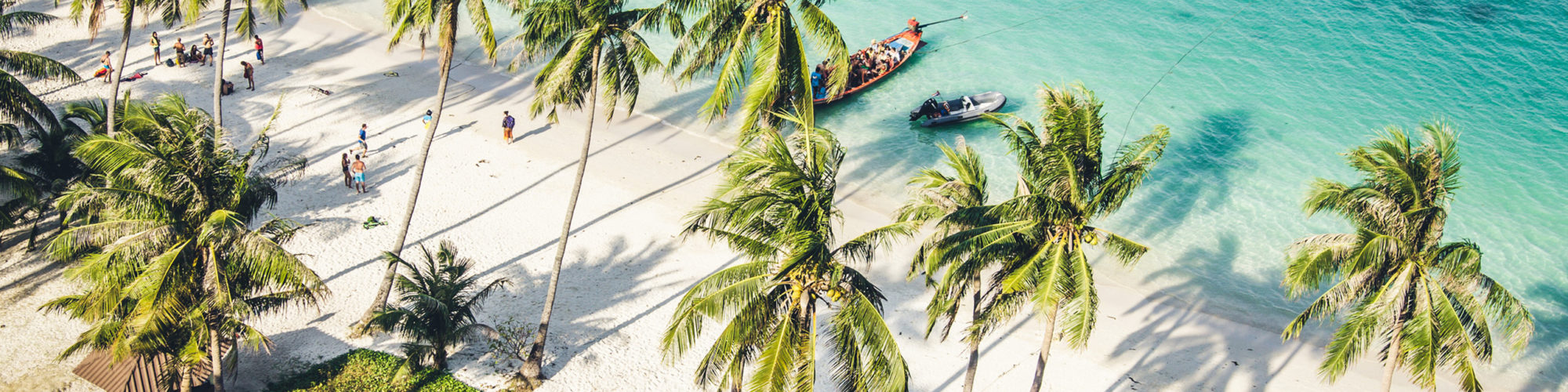
Among the main attractions of Thailand are beaches, snorkeling, scuba diving, temples, ruins, hill-tribe culture, trekking, fine handicrafts, excellent food, nightlife and very friendly people.
The beaches and islands along the eastern coast were not affected by the tsunami and are major destinations, similar in many ways to Phuket (pronounced Pu-KET) and the islands off the western coast. Chiang Mai and Chiang Rai in the north are the two top attractions in the hill country, offering everything from elephant treks to cooking classes.
Thailand will appeal to anyone who is interested in beach vacations, shopping, eating or archaeology, but especially to those who want to explore different cultures without sacrificing modern conveniences. Don't expect deluxe accommodations everywhere you stay, though, and be prepared for heat, humidity and dust during the dry season and lots of rain in the wet season.
Potpourri
The only Southeast Asian country never colonized by a European power, Thailand's name in the local language means Prathet Thai, or "Land of the Free." The country was formerly known as Siam.
Even though fewer youth abide by the custom today, young Thai men (even members of the royal family) serve as Buddhist monks for a short time before embarking on their careers.
In Thailand, each day of the week is associated with a color. Yellow symbolizes the monarchy because King Bhumibol was born on a Monday, which is represented with the color yellow. Queen Sirikit was born on a Friday, and thus represented by the color blue. But royal birthdays aren't the only hues inspiring local fashion. In 2007, King Bhumibol was photographed wearing pale pink after a long spell in the hospital. As such, his loyal subjects soon donned the pastel shade to wish him good health.
The Elephant Art School in Chon Buri hands over its brushes to elephants, whose paintings are sold for significant sums.
Thailand actually has two New Year celebrations: one on 1 January and another on the anniversary of Buddha's death in mid-April.
Anna and the King of Siam took place in Bangkok, but don't praise the book (or The King and I, the play and movie based on it) to Thais; they find it to be an offensive and condescending portrayal of one of their greatest kings.
Ban Chiang, in northeastern Thailand, is considered by many to be the most important prehistoric settlement ever discovered in Southeast Asia; it had bronze artifacts dating back to 2100 BC.
The world's smallest-sized mammal lives in Thailand. The bumblebee bat, also known as Kitti's hog-nosed bat, is an insect-eating mammal with a body length of just 1.1 in/2.9 cm; it weighs a mere 0.07 oz/2 g.
The Sofitel Centara Grand Resort & Villas Hua Hin stood in for Cambodia's Hotel Le Phnom in the film The Killing Fields.
Named Wichien-maat, or "moon diamond," in the local language, Siamese cats are native to Thailand and believed to be lucky. Gifting a certain breed (a Si Sawat Siamese) to a new bride is said to bless the marriage.
A century ago, more than 100,000 elephants lived in Thailand. Sadly, decades of poaching and overzealous logging have left a modern population of just 2,000-3,000.
In Thailand, leaving the house without underwear is illegal.