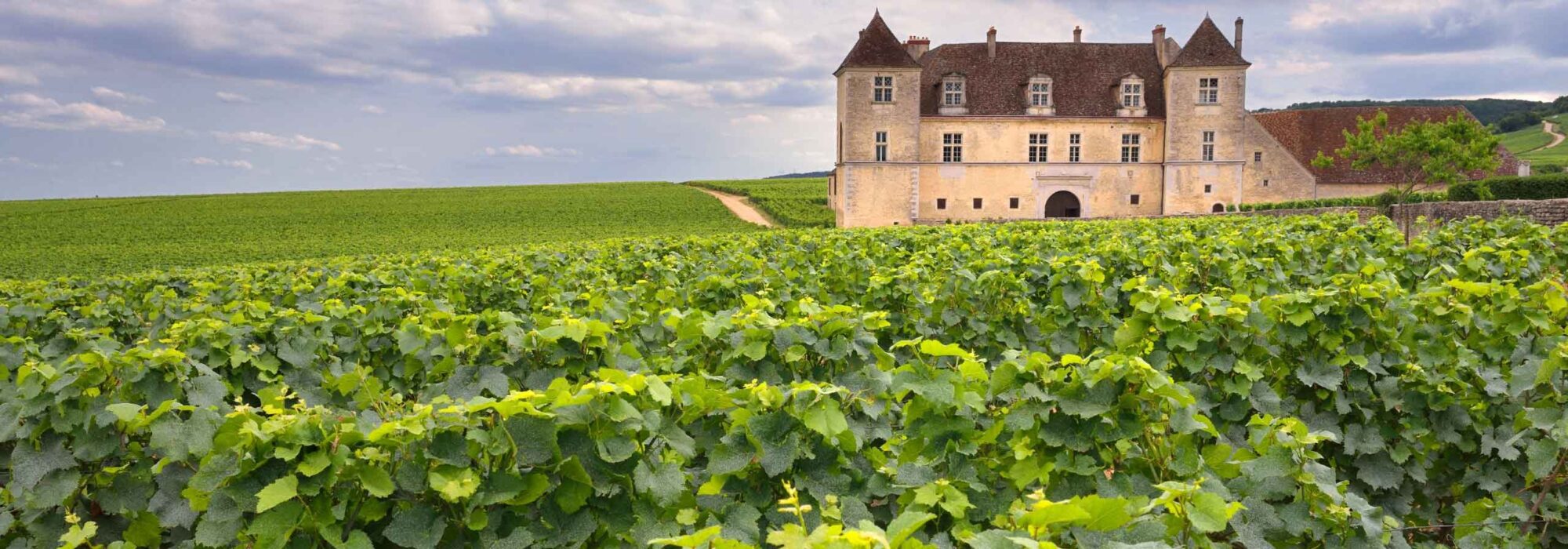
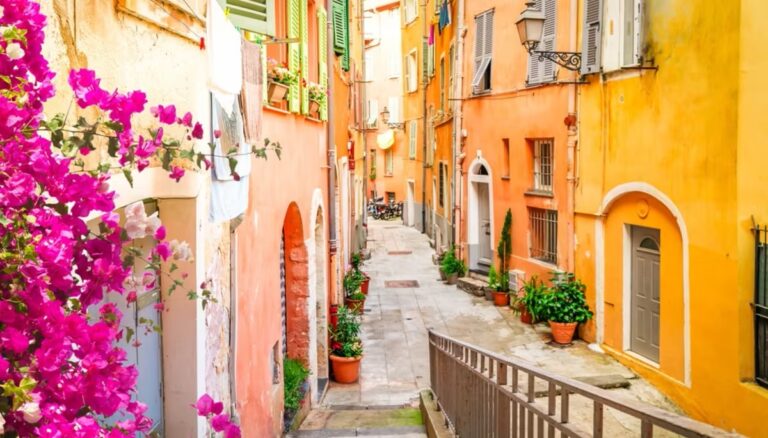
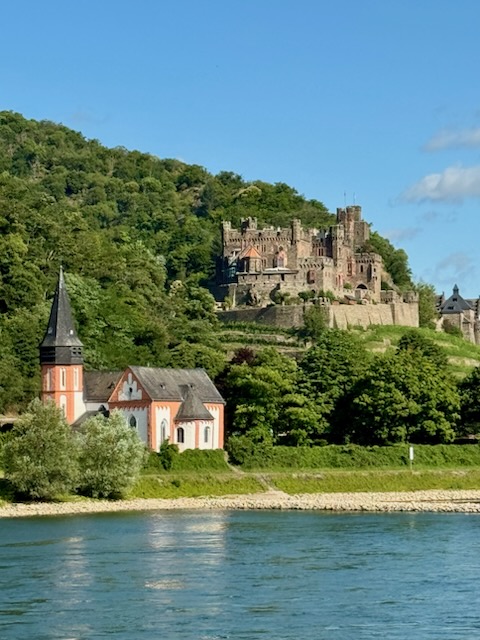
France is a country of regions, each with its own landscape and culture: the glittering crowds of the Cote d'Azur, the elegant chateaus of the Loire Valley, the hospitable vineyards of Bordeaux, the rocky coasts of Brittany, the dramatic slopes of the Alps and the Pyrenees, the charming farms and villages of Provence.
And of course, one cannot forget Paris, representing the height of fashion, art and food. Its sense of style is so strong it intimidates some visitors, yet the city can also be remarkably comfortable and intimate.
With such variety to discover, France can satisfy just about any traveler's taste.
Geography
France is bound on the south by the Pyrenees Mountains and the Mediterranean Sea; on the east by the Alps and the Rhine River; and on the west by the Atlantic Ocean and the English Channel.
Brittany juts out of the country's northwestern corner into the Atlantic; Normandy, meanwhile, extends along much of the English Channel. Picardy and Nord Pas de Calais lie in northeastern France, along the border with Belgium.
Moving south of Paris, one encounters the winegrowing regions of the Loire Valley to the southwest and Burgundy to the southeast. Along France's eastern edge, butting up against Germany and Switzerland, are the regions of Alsace and Lorraine. Just to the south are the Alps, which share a border with Switzerland and Italy. In the country's center, the formerly volcanic mountain range of the Auvergne borders the winegrowing region of the Rhone Valley.
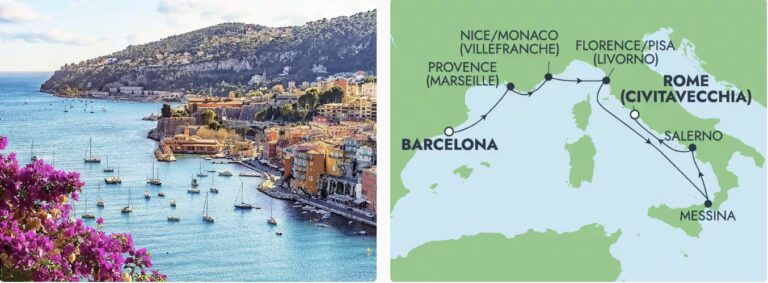
In southern France lie the Basque region and the Pyrenees, along the border with Spain. Languedoc-Roussillon and the Riviera (also called the Cote d'Azur) comprise much of the Mediterranean coast. Provence, meanwhile, stretches inland from a small part of the Mediterranean coast.
History
The Romans first occupied what was then southern Gaul in 121 BC and, following Julius Caesar's successful campaign, expanded through the rest of the area by 51 BC. They built beautiful arenas, villas, aqueducts, thermal-spring baths and other structures, many of which are still prominent in southern France today.
In the Middle Ages, prominent religious orders built a great variety of buildings including the fourth-century Baptistery of St. Jean in Poitiers—the oldest existing Christian building in the West. Hundreds of abbeys and churches throughout the country followed, and medieval towns were fortified by thick walls for protection; some, such as Carcassonne and Mont Saint-Michel, still stand; the track of the old walls of other towns can be seen in their street plans.
Around the beginning of the 13th century, the Romanesque style was eclipsed by Gothic architecture: the soaring cathedrals of Reims, Amiens, Chartres, and Paris still stand as evidence of this period. The Renaissance, meanwhile, introduced the architecture now in the chateaus of the Loire Valley and the Louvre, then the palace of the French kings.
During the reign of Louis XIV, the French court relocated to the Palace Versailles, a stunning feat of baroque architecture. The 19th century saw much of the religious and royal architecture destroyed following multiple revolutions, though it was also a time of architectural feats including the 1889 Eiffel Tower in Paris.
French 20th-century architecture, such as Le Corbusier's Chapel of Notre Dame at Ronchamp, Rogers' and Piano's Pompidou Center and Pei's glass pyramid for the Louvre, have influenced architectural thought well beyond the borders of France.
In recent decades, France has become more of a melting pot, with immigrants from all over Europe, Africa and the Middle East flocking toward the hope of a better life. This has brought conflict, of course, but France has also evolved to welcome these changes. Paris is home to one of the country's largest and most beautiful mosques, and the language and cuisine of France have also adapted to changes, with contemporary flavors gracing French tables..
Snapshot
France offers something for just about everyone. Museums, cathedrals, chateaus and palaces are a major draw for tourists. The nation also offers a variety of outdoor activities, such as skiing, hiking, mountain climbing and water sports. Cities boast exquisite cuisine, shopping, nightlife and sidewalk cafes, and smaller towns are often home to excellent spas, casinos and beautiful architecture. Potpourri
Cycling is one of the most popular sports in France, and it's an excellent way to see the countryside if you have time. Top-quality bikes, bike mechanics and thousands of miles/kilometers of beautiful roads and scenery can be found in nearly every part of the country. If you're in Paris in late July, be sure to snag a spot along the Champs-Elysees to witness the finish of the granddaddy of cycling races, the Tour de France.
Blue jeans were an American innovation, but the fabric they're made from has its origin in the southern French city of Nimes; in fact denim comes from the French "de Nimes," meaning "from Nimes."
Authentic champagne can only come from the Champagne region of France. Sparkling wines produced anywhere else—even if they're made according to the methode champenoise—cannot use the word champagne.
The French take great pride in their culture, but their taste can be baffling to outsiders. Sylvester Stallone was dubbed a living legend of modern culture by a French Minister of Culture and was inducted into the French Order of Arts and Letters. He joined Jerry Lewis ("he's so shallow, he's deep") as a cultural icon in France.
Orleans, located midway between Paris and Tours, is the site of Joan of Arc's most important battle. A statue of her stands on the Place du Martroi.
The town of Falaise has a statue of its most famous son, the first King of England, William the Bastard. (The English prefer to call him William the Conqueror.)
Despite stereotypes to the contrary, French people who speak English are becoming less and less rare, and if you don't speak French, you should still be able to communicate. About 85% of French students learn English in school, and many French people speak at least some English.