Though Germany is weathering the world financial difficulties better than most countries, the impact of unification at the end of the Cold War means there are still significant disparities between east and west. Nevertheless, continued significant investment in public services, research and development, and infrastructure projects has ensured that Germany has one of the highest standards of living in the world.
In real terms, this means that travelers are likely to move around the country faster, dine better and experience newer attractions, such as the Reichstag's glass dome or the spectacular Elbphilharmonie in Hamburg. A lot has changed, yet chances are that repeat visitors will still find the things they always liked: the restaurant serving huge helpings of sauerbraten or the biergarten with liter upon liter of lager and wheat beer.
Germany is a relatively new nation, created in 1871, and it has retained a very strong federal element. Rather, therefore, than looking at the country in terms of east and west, Germany is best seen as a host of regions sharply defined by dialect, food, traditions and history. For the best perspective, sample as many regions as possible.
Culturally, Berlin is booming, and it is now the country's No. 1 tourist magnet. Visitors to the cultural centers of Dresden, Leipzig and Weimar in eastern Germany will find much improved amenities there as well. The north has the delightful old seafaring cities of Hamburg and Bremen.
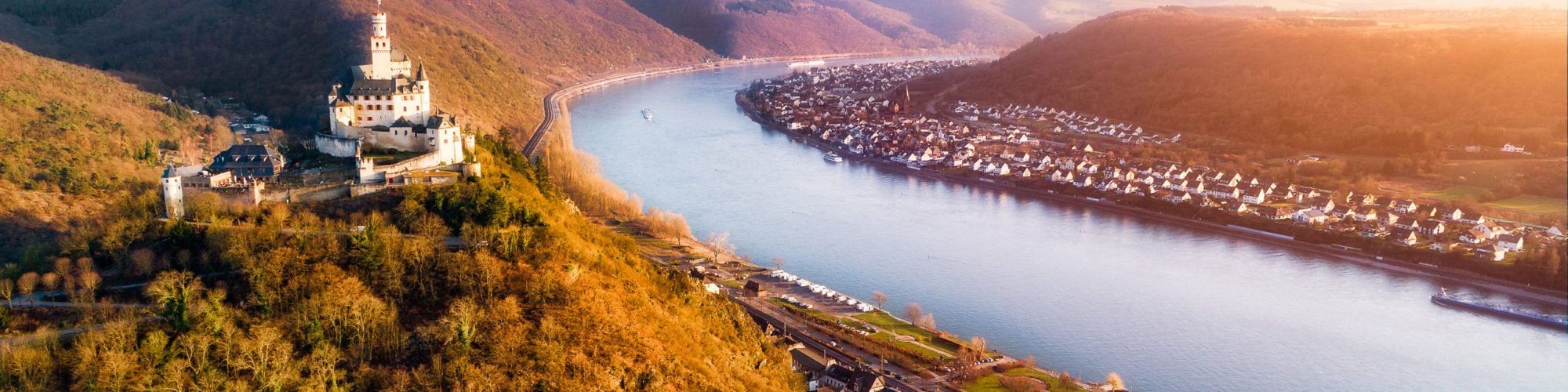
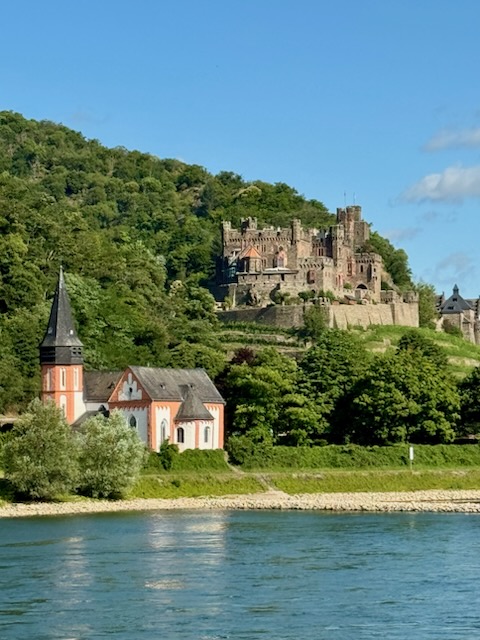
Along the Rhine and Moselle rivers are picturesque castles and steep, terraced vineyards. The Grimm Brothers collected the tales they heard in a trail of villages from Hanau to Bremen. In the south are snowcapped Alps, the alluring Black Forest, Munich, and Bavaria's boisterous beer halls and rococo palaces and churches.
Although it has plenty of fairy-tale sights and picturesque scenery that is reminiscent of medieval times, Germany is without a doubt a postindustrial, multicultural country with all the inherent advantages and conflicts. Reunification was a huge social and economic undertaking, and it came on top of an already heavy and, at times, troubled history. Broadly speaking, it has been a remarkable success, though travelers shouldn't expect all parts of the country, at all times, to be an Oktoberfest.
Geography
Germany shares a border with nine countries, more than any other European nation. Internally, it's divided into 16 bundeslander (provinces or states). Its only coastlines are in the north, along the North and Baltic seas. In the south are mostly foothills and mountains: the Alps in the far south and the Erzgebirge in the southeast. The central part of the country is also spotted with several smaller mountain ranges. The northern third of the country is mostly a plain.
Rivers are also distinctive features. The main ones are the Rhine, which flows northward in the western part of the country; the Danube, which begins as a trickle in the southwest and becomes a real river farther east; the Elbe, which flows through Dresden in the southeast and into the North Sea near Hamburg; and the Oder and Neisse, which together form the eastern border with Poland.
If the country were a clockface, Berlin would be at 2, Dresden 3, Munich 6, Frankfurt 9, Cologne 10 and Hamburg 12.
History
The 1945 division of Germany and its 1990 reunification fit the pattern of the nation's history: Germany has constantly gone through periods of conquest, occupation and reorganization.
The Danube River and the Rhine River divided the Germanic tribes from the Romans in the first century AD, but 500 years later Christianity began to take hold over the entire region. On Christmas Day in the year 800, the pope crowned the king of the Franks, Charlemagne, emperor of the Romans. It was the birth of the Holy Roman Empire (the First Reich), which lasted until the Napoleonic wars in the 19th century.
In 1517, Martin Luther set the Reformation in motion. Eventually, tensions between Protestants and Catholics resulted in the Thirty Years War, which ended in 1648.
The strong authority of local princes kept Germany from truly uniting as a nation until the rise of Prussian power and the formation of the German empire in 1871 (the Second Reich), under the chancellorship of Otto von Bismarck and the first kaiser, Wilhelm I. Just two kaisers later, the monarchy was dissolved when Wilhelm II abdicated his throne at the end of World War I.
Crushing inflation and social unrest after World War I caused political instability in the Weimar Republic. Those conditions were exploited by the Nazi party, under Adolf Hitler, who came to power in 1933, the beginning of the Third Reich. Germany invaded Poland in 1939, which started World War II.
When Germany was defeated, it was split again, with the eastern sector under the control of the Soviet Union and the three western sectors under the control of France, Britain and the U.S. During the Cold War, East Germany enjoyed the highest standard of living among Warsaw Pact countries, though that prosperity was relative: West Germany forged ahead with the economic miracle spurred on by the Marshall Plan.
The Berlin Wall fell in November 1989, and less than a year later, the two Germanys were reunited.
Today, Germany is the economic powerhouse of Europe and one of the biggest advocates of the European Union. Its leading position in the EU also offers its citizens, and the world, a positive and progressive outlook for the country's future.
Snapshot
Germany's main attractions are history; Berlin; mountains and forests; river cruises; Christmas markets; lakes and beaches; art, architecture and performing arts; wine and beer; soccer, skiing, fishing and hiking; health spas and casinos; castles and churches; Alpine scenery; farmland; shopping; and Munich.
The country will appeal to travelers who are interested in European history, old-world architecture, lovely landscapes and cultural attractions as well as the flavor of German life. Travelers who are particularly interested in warm-water beaches and consistently nice weather may be happier in other European destinations.
Potpourri
The first Green Party was organized in Germany, and Germany is one of the leading European countries in terms of recycling and the generation of solar and wind-based power.
The Neanderthal Man got his name from the Neanderthal Valley near Duesseldorf where the first skeleton was unearthed in 1865. The last Neanderthals vanished around 30,000 years ago, though they were actually much more intelligent than usually portrayed.
The Russian writer Leo Tolstoy often lost all his possessions at the casino Baden Baden. It is also the setting of Fyodor Dostoevsky's novels The Double and The Gambler.
Bremerhaven was Germany's most important port for people emigrating into the New World. About 7 million people left Old Europe from there. Only 4 million were Germans. German ships were popular because they were safer and more comfortable than those leaving from Britain or France.
The 6 million visitors to Munich's annual Oktoberfest drink a total of around 1.8 million gal/7 million l of beer, and eat around 520,000 half-chickens, 140,000 pairs of sausages and 100 oxen.
In the 19th century, the Brothers Grimm collected fairy tales in many towns and regions in Germany and committed them to paper: Snow White and Rose Red took place in Muhldorf, Puss-in-Boots near Berlin, Snow White and the Seven Dwarfs in Alfeld, Sleeping Beauty in Sababurg, Little Red Riding Hood in Hesse, Hansel and Gretel near Marburg, and Cinderella in Budingen.
There are about 40 castles on the Rhine River between Koblenz and Mainz.
In addition to visiting the Bauhaus-Archiv in Berlin, enthusiasts of the Bauhaus style of architecture will want to visit Dessau, where the movement was important from 1925 to 1932.
Schloss Herrenchiemsee is a Bavarian castle with a difference: Built by King Ludwig II on an island in Lake Chiemsee, it's a miniature copy of Versailles. It was never finished; Ludwig ran out of money.