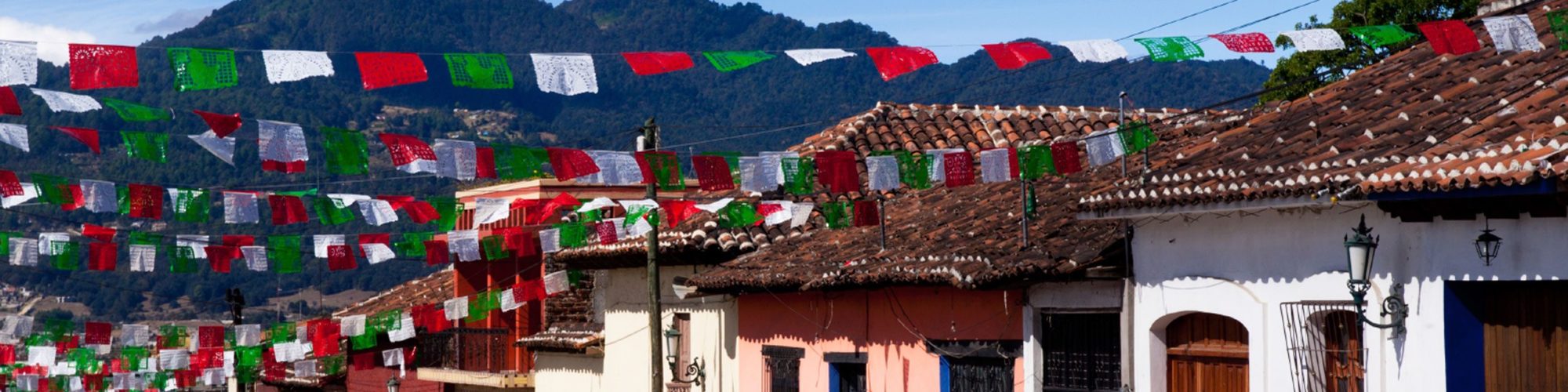
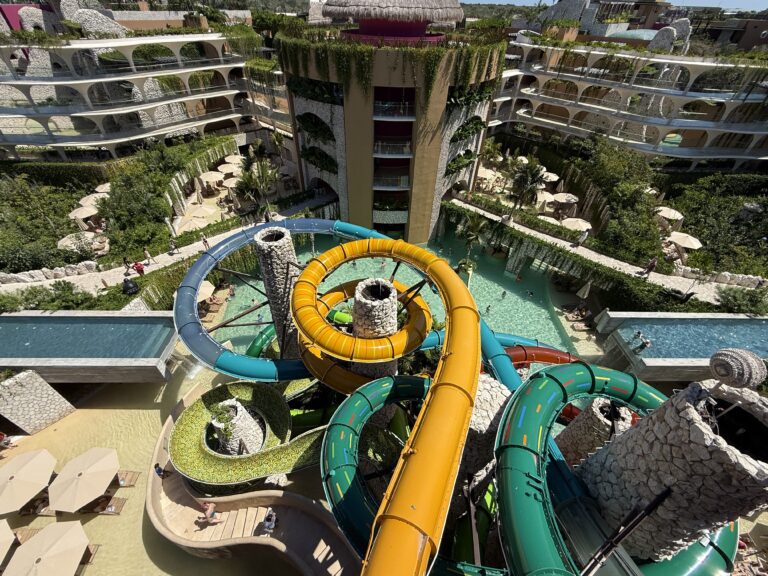
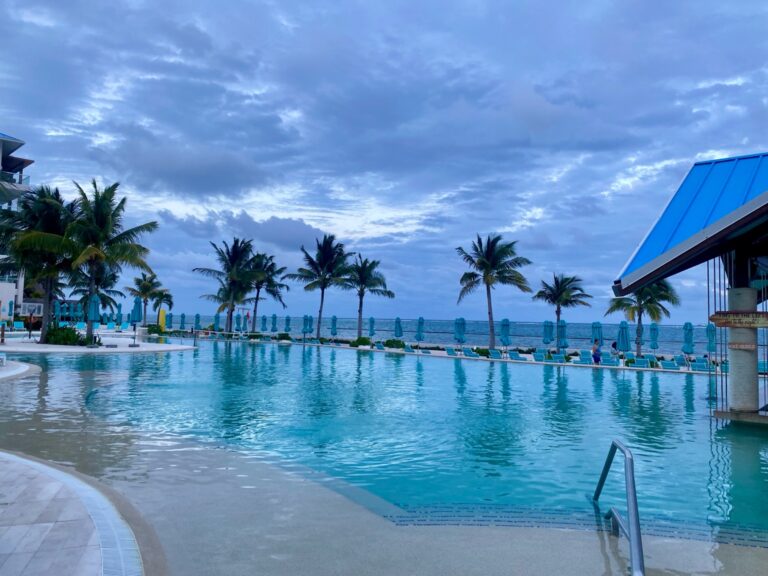
Mexico is popular with travelers from all over the world. They go there for reasons almost too numerous to mention: sunshine, blue seas teeming with fish and coral, crystal-white beaches, lofty mountains and volcanoes, jungles full of exotic wildlife, world-famous museums and painters, collectible folk art, postcard-perfect Spanish colonial cities and the breathtaking remains of ancient cultures. And some go for a less lofty reason: Mexico can be cheap, although you may have to get out of the popular resort areas to enjoy big savings.
Popular destinations in Mexico include Cancun, Cozumel and Playa del Carmen on the Yucatan Peninsula in the east, and Cabo San Lucas and San Jose del Cabo on the Baja Peninsula in the west. Between those two peninsulas lie such cities as Guadalajara, Mexico City, San Miguel de Allende, Acapulco, Puerto Vallarta and Oaxaca. Many visitors also take the train ride through Copper Canyon.
The megalopolis of Mexico City is Mexico's capital and lies roughly in the middle of the country. Approximately 10 million people live in the city limits, but at least twice that number call metropolitan Mexico City home: By most estimates this is the fifth- or sixth-largest city in the world.
We're compelled, of course, to remind would-be visitors of Mexico's unevenness. It remains a land of baffling contradictions. Just down the street from a five-star resort, families camp in ramshackle buildings without plumbing. Burros, with rough-hewn carts in tow, amble alongside express highways. Serious pollution problems confront some cities, and a huge population strains its resources. The economy is growing and the middle class is growing along with it, but there is widespread poverty, and people are yearning for a better standard of living.
Through it all, Mexico endures with patience and a laid-back, "live and let live" attitude.
Geography
Mexico is a large country with diverse landscapes. Much of the northern part of the country is on a high plateau and is made up of the Chihuahuan and Sonoran deserts. Two mountain chains—the Sierra Madre Occidental, to the west, and the Sierra Madre Oriental, to the east—extend for a good length of the country. Between these and some smaller mountain ranges are several plains and valleys that hold many of the country's major cities.
Mexico also features arid coastal plains, the famous Baja Peninsula and the thick tropical jungles of the Yucatan and Chiapas. The country has long and alluring coastlines washed by the Gulf of Mexico, the Pacific Ocean, the Gulf of California and the Caribbean Sea.
History
Mexico has one of the most fascinating histories in the Americas. The first residents reached the area more than 20,000 years ago. In time, the descendants of these first immigrants produced monumental architecture, incredibly precise calendars and advanced agricultural accomplishments (they gave the world corn, vanilla, chocolate and tomatoes).
Beginning around 1200 BC, a series of great civilizations waxed and waned along the Gulf Coast and southern portions of Mexico, including the Olmecs and the Maya. The Toltecs and a number of other groups came later.
The Aztecs began their rise to power around AD 1300, establishing their capital at Tenochtitlan (present-day Mexico City) and eventually conquering all other groups in central and southern Mexico. Like some of their predecessors, they were a warrior civilization. Rivals who were forced to pay tribute to the Aztecs were looking for an opportunity to throw off their rule, and that opportunity soon presented itself.
Hernan Cortes first stepped ashore on Mexico in 1519 and established the town of Veracruz on the Gulf Coast. With just 500 followers, the conquistador engineered the downfall of an Aztec empire by forming alliances with the Aztec's enemies, which swelled his army to more than 5,000. Diseases that the Spanish brought with them, such as smallpox, also overwhelmed the Aztecs. It took Cortes two years to defeat the Aztecs, and with his victory, Mexico came under Spanish rule.
Spanish-Mexican Indian intermarriage yielded a new mixed race of people—mestizos. Their culture was influenced by the mother country in its language, architecture, traditions and religion. The Spanish colonial capital—Mexico City—was literally built from the rubble of Tenochtitlan, as Aztec temples were dismantled to build royal palaces and churches. For the next 300 years, the city served as the center of the vast colony of New Spain.
Mexican patriots started fighting for freedom in 1810 and gained independence from the Spanish crown by 1821. The ensuing decades were turbulent for the new country: Mexico passed through years of dictatorship and instability. From the 1830s through the 1850s, Gen. Antonio Lopez de Santa Ana ruled the country. During this period, Mexico lost half of its territory in wars against rebellious Texans (in 1836) and against the U.S. (in 1847).
In the 1850s, the country was embroiled in a civil war that eventually resulted in Benito Juarez being elected president. One of Mexico's most progressive presidents, Juarez instituted a liberal government and the separation of church and state in a political movement called La Reforma. He also led the fight against French invaders, who ruled the country for several years and placed Emperor Maximilian on the throne before they were forced to withdraw, leaving Maximilian to the firing squad.
The modern era began in 1910 with the outbreak of the Mexican Revolution. The decade-long conflict produced some of Mexico's most enduring figures, including the rebel leaders Pancho Villa and Emiliano Zapata. The Institutional Revolutionary Party (PRI) held power through the next seven decades, giving Mexico one of the longest-lasting governments in Latin America, some say with near dictatorial status.
The 1990s were unstable for Mexico. After years of state control, the government began liberalizing the economy, joining the North American Free Trade Agreement (NAFTA) in 1994. For a time, the economy seemed to be booming, until a massive devaluation of its currency dragged the country back into crisis in late 1994. Earlier that year, a small group of rebels in Chiapas State, calling themselves Zapatistas, staged a rebellion that drew international attention to the poverty endured by the country's Maya Indians. A series of high-profile political assassinations rocked already waning faith in the government.
After several prominent victories by opposition candidates in local and regional elections, Vicente Fox was elected president in 2000, breaking the PRI's hold on power for the first time since the revolution. Fox's party, the PAN, a conservative centrist group, went on to win the next election in 2006 when Felipe Calderon was elected president. Winning by less than 1% of the vote, Calderon's victory was hotly contested by his opponent, Manuel Lopez Obrador of the leftist PRD party. Lopez Obrador tried unsuccessfully to set up a parallel government in the months following the election but failed. The Electoral Institute supported Calderon's win.
Then in 2012, Mexico did an about face by electing PRI candidate, Enrique Pena Nieto, president based mostly on his platform of reform. Although he has been praised internationally for standing up to big business monopolies and putting behind bars one of the country's most notorious drug lords, "El Chapo" Guzman, his popularity at home began to wane following an announcement in 2014 of turning the government-run energy sector over to private investors.
In 2018, Andres Manuel Lopez Obrador was elected president.
Snapshot
Mexico's attractions include its historical sites, archaeological ruins, cuisine, fiestas, beaches, fishing, watersports (scuba diving, snorkeling, surfing), golf, bullfighting, shopping, handicrafts, music, dance, relaxation and moderate prices.
If you're interested in a unique culture and enjoy sand, sun and surf, as well as history, dance, music and friendly, fun-loving people, you'll love Mexico. Do be aware that you may fall prey to an upset stomach or other illness that can occur where sanitary conditions are less than optimal, though the risk gets a bit lower each passing year. You should also be prepared to see extreme poverty, especially in rural areas. If you become unhappy when service isn't prompt and efficient or when things don't quite go as planned, you may not enjoy a trip to Mexico. If you go with the flow and delight in surreal experiences, you will.
Potpourri
The two rebel heroes of the Mexican Revolution, Emiliano Zapata and Francisco "Pancho" Villa, were both treacherously assassinated—Zapata in 1919 (at the direction of then-President Venustiano Carranza) and Villa in 1923. Villa also was Mexico's first movie star, starring as himself in the 1914 Hollywood-produced The Life of General Villa.
The Tarahumara Indians, who live in the vicinity of Copper Canyon, are renowned for their fitness and stamina, which have been honed by years of running up and down the region's steep mountains. One of their many festivals includes an all-night run of more than 100 mi/160 km.
You can tour several tequila factories in the town of Tequila, birthplace of the quintessential Mexican drink. The Mexican government sponsors the Tequila Trail tour through five well-known tequila-producing towns. There's also a "Tequila Express" tourist train from Guadalajara to the Herradura distillery.
Los Cabos has become the party town of such celebrities as John Travolta, Jennifer Anniston and Oprah Winfrey.
The Fairmont Acapulco Princess in Acapulco became a refuge for eccentric billionaire Howard Hughes in the 1970s before he fled to Nicaragua.
Some say the word "jalopy" comes from the 1920s, when old U.S. cars were shipped to the capital of Veracruz for reconditioning and resale. U.S. longshoremen pronounced the destination, Jalapa, as ja-la-pa (rather than with the Spanish pronunciation, ha-la-pa). The mispronounced word evolved into "jalopy."
According to one legend, the margarita was invented in the town of Taxco at Bertha's Bar, which is still standing today. The drink reputedly started out as a hot toddy. Other stories claim the honor for Mexico City and Tijuana (where it was supposedly inspired by Rita Hayworth, then known by her original name of Margarita Cansino).
Mexican icon Frida Kahlo married and divorced her husband, famed muralist Diego Rivera, twice. Kahlo also had affairs with Russian intellectual Leon Trotsky and dancer Josephine Baker, among many others.