A Highlight of Cambria CA
Cambria, California: A Charming Coastal Escape You'll Fall in Love With If you're dreaming of a relaxing getaway filled with ocean views, charming shops, delicious food, and a slower pace of life, Ca...
Read more










How to become a Disney travel agent in California

Becoming a travel agent in California can be a rewarding and exciting career, offering the opportunity to plan and book travel for clients, from flights and accommodations to organizing activities and excursions. As a Disney travel agent, you will have the chance to leverage your local knowledge to create unique travel experiences, whether it's a foodie tour of San Diego or a nature exploration in Big Sur.
To start your journey, it's essential to understand the role of a travel agent. This involves planning and booking travel arrangements, gathering information about clients' travel plans, researching destinations, and creating itineraries that fit within the traveler’s budget. Travel agents must also offer travel packages from a network of hotel, resort, airline, and cruise line partners, and provide additional services such as recommending travel insurance options and booking flights and accommodations.
In California, there are specific legal requirements you must fulfill to become a travel agent. The primary requirement is obtaining a "Seller of Travel" license by registering with the California Attorney General's Office. This registration is mandatory for all travel agents and agencies operating in the state. Additionally, you will need an IATA number, which can be provided by a host business if you choose to work with one.
Registering as a Seller of Travel involves completing an application, paying a registration fee, and submitting the application to the Seller of Travel Program at the Attorney General’s office.
While formal education or certifications are not strictly necessary, they are highly encouraged. Enrolling in a training program or obtaining certifications from organizations like the American Society of Travel Advisors (ASTA) or The Travel Institute can significantly enhance your skills and job prospects. These programs cover essential topics such as marketing yourself as a travel professional, customer service skills, and the fundamentals of the travel industry.
| Step | Description |
|---|---|
| Understand the Role | Learn the responsibilities and tasks of a travel agent. |
| Meet Legal Requirements | Obtain a Seller of Travel license and an IATA number. |
| Education and Training | Enroll in a training program or obtain relevant certifications. |
By following these steps and gaining the necessary knowledge and certifications, you can set yourself up for success in the exciting and dynamic world of travel business work in California.
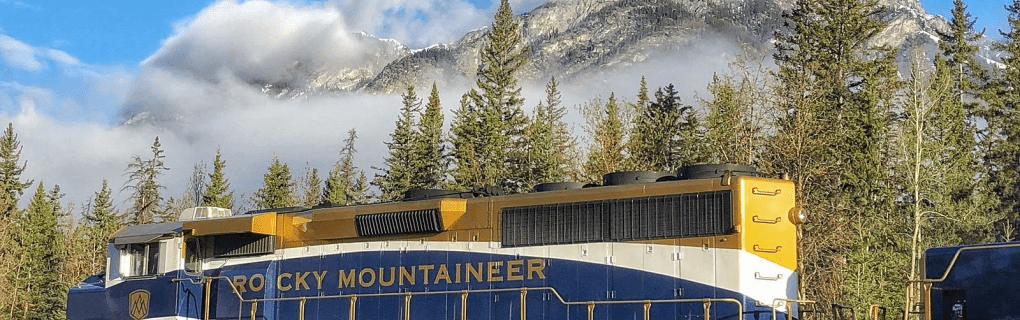
As a travel agent, your primary responsibilities include planning and booking travel arrangements for clients. This encompasses a wide range of tasks such as booking flights, arranging accommodations, and organizing activities and excursions. You will also need to gather information about clients' travel plans, research destinations, and create personalized itineraries that fit within the traveler’s budget.
Travel agents offer a variety of travel services to cater to different client needs. These services can include booking trips of all types, whether it's a family vacation, a honeymoon, a business trip, or an adventure tour. You can also specialize in specific types of travel, such as luxury travel, eco-tourism, or corporate travel. Leveraging your local knowledge, you can plan unique trips within California, such as foodie tours of San Diego or nature explorations in Big Sur.
| Type of Service | Description |
|---|---|
| Flight Bookings | Booking domestic and international flights for clients. |
| Accommodation Arrangements | Reserving hotel rooms, resorts, or other types of lodging. |
| Activity and Excursion Planning | Organizing tours, sightseeing trips, and other activities based on client preferences. |
Providing exceptional customer service is a critical aspect of being a travel agent. This involves understanding clients' needs and preferences, offering personalized travel recommendations, and ensuring client satisfaction throughout the entire travel planning and execution process. Effective communication and problem-solving skills are essential for handling client inquiries and resolving any issues that may arise.
Building strong relationships with clients is key to a successful career as a travel agent. This includes being responsive to client needs, providing clear and timely information, and ensuring that all travel arrangements are tailored to meet their expectations.

To operate as a travel agent in California, you need an IATA (International Air Transport Association) number. This unique identifier is crucial for conducting business as a travel business. If you are working with a host business, they typically provide access to an IATA number, making the process simpler for you.
In California, all travel agents must register with the California Attorney General's Office as a "Seller of Travel." This registration is mandatory for anyone who sells, arranges, or advertises travel services such as flights, cruises, or land and water transportation exceeding $300. ### Application Process
The registration process involves completing a detailed application form. You will need to provide the address of all physical business locations within California, along with any fictitious business names (DBAs) and contact information such as phone numbers, fax numbers, and email addresses. If you plan to advertise or sell travel through a website, you must also provide the home page addresses. Additionally, you need to list any ARC (Airline Reporting Corporation), IATAN (International Airlines Travel Agent Network), or CLIA (Cruise Line International Association) numbers associated with your business locations.
### Registration Fee and Certificate
Information Type
Description
Business Locations
Physical addresses of all business locations within California.
Fictitious Business Names (DBAs)
All additional fictitious business names used by the Seller of Travel.
Contact Information
Phone numbers, fax numbers, and email addresses for each location.
Website Addresses
Home page addresses if selling travel through a website.
Industry Numbers
ARC, IATAN, or CLIA numbers associated with the business locations.
The registration fee for becoming a Seller of Travel in California is $100 per business location. You need to calculate the total fee based on the number of business locations listed in your application. Once the application is complete, along with the required fee, it must be submitted to the Seller of Travel Program at the Attorney General’s office. Your registration will not be complete until you receive a valid Acknowledgment of Registration letter, which includes a Seller of Travel Certificate.
Displaying the registration number on all advertising is mandatory, as it signifies that the seller of travel has followed the law to be registered.

To become a travel agent in California, the minimum educational requirement is a high school diploma or a GED. This foundational education sets the stage for further training and development in the travel industry.
Formal education is just the beginning; specialized training is crucial for becoming a proficient travel agent. There are several types of training programs and courses available to help you gain the necessary skills.
### Travel Agent Proficiency (TAP) Test Preparation| Aspect | Description |
|---|---|
| Selling Skills | Understanding how to effectively sell travel services to clients. |
| Basic Geography | Knowledge of international and domestic travel destinations. |
| Products Sold | Familiarity with the various travel products and services offered by travel counselors. |
On-the-job training is invaluable as it allows you to learn from experienced professionals and apply your knowledge in real-world scenarios.
| Topic | Description |
|---|---|
| Travel Agent Basics | Industry terminology, best practices, and more. |
| Leisure and Group Bookings | Insights and instructions for booking different types of travel. |
| Comprehensive Sales Training | How to negotiate with suppliers and service clients during travel. |
Strong customer service skills are key to building a loyal client base and ensuring repeat business.
| Sector | Description |
|---|---|
| Airlines | Booking flights and understanding airline policies. |
| Ground Transportation | Arranging car rentals, taxis, and other ground travel options. |
| Hotels and Resorts | Reserving accommodations and understanding hospitality services. |

Working with a host business can be a game-changer for aspiring travel agents in California. One of the primary benefits is the access to established industry connections and resources that would be difficult to acquire on your own. Host agencies often have existing relationships with airlines, hotels, and other travel suppliers, which can lead to better rates and more options for your clients.
Host agencies offer access to advanced booking systems and partner programs that are essential for efficient and effective travel planning. These systems enable you to book flights, hotels, and other travel arrangements seamlessly, often with exclusive rates and perks. For instance, many host agencies provide access to Global Distribution Systems (GDS) like Sabre, Amadeus, or Travelport, which are crucial for managing travel bookings professionally.
### Marketing Support and Training
System/Program
Description
Global Distribution Systems (GDS)
Tools like Sabre, Amadeus, or Travelport for managing travel bookings.
Partner Programs
Exclusive rates and perks from airlines, hotels, and other travel suppliers.
Host agencies also provide valuable marketing support and training, which are vital for attracting and retaining clients. This includes access to marketing materials, training sessions on sales techniques, and guidance on how to leverage social media and other digital platforms to promote your services. Many host agencies offer ongoing education and training programs to keep you updated with the latest industry trends and best practices.
These resources help you stay competitive and ensure that you are always equipped to offer the best possible service to your clients.

The Travel Agent Proficiency (TAP) test is a highly respected certification in the travel industry. This test, offered by The Travel Institute, is designed to assess your knowledge and skills as a travel agent. Preparing for and passing the TAP test demonstrates your mastery of the basics of the travel industry, including selling skills, basic geography, and the products sold by travel counselors. This certification is highly encouraged and can significantly enhance your career prospects and credibility as a travel agent.
| Aspect | Description |
|---|---|
| Selling Skills | Understanding how to effectively sell travel services to clients. |
| Basic Geography | Knowledge of international and domestic travel destinations. |
| Products Sold | Familiarity with the various travel products and services offered by travel counselors. |
Beyond the TAP test, there are several other certifications that can further recognize your professionalism and expertise in the travel industry. For instance, certifications from organizations like the American Society of Travel Advisors (ASTA) or the International Air Transport Association (IATA) can be highly beneficial. These certifications often focus on specialized areas such as cruise travel, luxury travel, or corporate travel, and they can help you stand out in a competitive market.
Specialized certifications can open up new opportunities and allow you to cater to a diverse range of clients with specific travel needs.
| Certification | Description |
|---|---|
| ASTA Certification | Certifications offered by the American Society of Travel Advisors, focusing on various aspects of travel business operations. |
| IATA Certification | Certifications from the International Air Transport Association, often related to airline operations and travel management. |
| Cruise Line International Association (CLIA) Certification | Certifications specializing in cruise travel, offered by CLIA. |

To kickstart your career as a travel agent in California, enrolling in a training program is a crucial step. These programs are designed to equip you with the necessary skills and knowledge to succeed in the travel industry. Many training programs, such as those offered by The Travel Institute or through host agencies like Fora, include comprehensive courses on travel agent basics, customer service skills, and the fundamentals of the travel industry. These programs often prepare you for certifications like the Travel Agent Proficiency (TAP) test, which can significantly enhance your career prospects.
Component
Description
Travel Agent Basics
Understanding the role and responsibilities of a travel agent.
Customer Service Skills
Learning how to provide exceptional service to clients.
Industry Fundamentals
Familiarity with airlines, ground transportation, hotels, and resorts.
To legally operate as a travel agent in California, you must register as a "Seller of Travel" with the California Attorney General's Office. This involves completing a registration application, paying a $100 registration fee per business location, and submitting the application to the Seller of Travel Program. Once your application is approved, you will receive a Seller of Travel Certificate, which you must display at your business location and include in any advertisements or promotional materials.
This registration is mandatory for all travel agents and agencies operating in California, ensuring compliance with state law and building trust with clients.
| Step | Description |
|---|---|
| Complete Registration Application | Filling out the required form with detailed business information. |
| Pay Registration Fee | Paying $100 per business location as part of the registration process. |
| Submit Application | Mailing the application and fee to the Seller of Travel Program at the Attorney General’s office. |
After completing your training and registration, you have two primary options to consider: joining a host business or starting your own travel business. Joining a host business provides you with immediate access to resources such as IATA numbers, booking systems, and marketing support. This can be particularly beneficial for new travel agents as it allows you to hit the ground running with established industry connections and tools.
Benefit
Description
Access to Resources
IATA numbers, booking systems, and marketing support.
Established Industry Connections
Existing relationships with airlines, hotels, and other travel suppliers.
Ongoing Training and Support
Continuous education and support to stay updated with industry trends.
If you prefer to start your own business, you will need to establish your own business entity, obtain necessary licenses and registrations, and build your client base from scratch. This option requires more initial effort but can offer greater independence and flexibility in the long run.
Starting your own business allows you to tailor your business to your unique vision and client needs, but it also requires more upfront work and resources.

Becoming a travel agent in California is a rewarding and exciting career path that offers the opportunity to help people create unforgettable travel experiences. From understanding the role and responsibilities of a travel agent to obtaining the necessary certifications and registrations, the journey is both challenging and fulfilling.
The key to a successful career as a travel agent is a combination of formal education, specialized training, and ongoing professional development. Programs like those offered by The Travel Institute, LuxRally Travel, and various California trade schools provide the foundational knowledge and skills necessary to excel in the travel industry.
| Aspect | Description |
|---|---|
| Formal Education | A high school diploma or GED is the minimum requirement, but further education can be beneficial. |
| Specialized Training | Training programs that cover travel agent basics, customer service, and industry fundamentals. |
| Certifications | Certifications like the TAP test and others from ASTA, CLIA, and IATA can enhance your career prospects. |
| Registrations | Obtaining an IATA number and a California Seller of Travel license is mandatory. |
Remember, becoming a successful travel agent is not just about fulfilling the legal and educational requirements; it's also about providing exceptional service, staying updated with industry trends, and continuously improving your skills.
As you embark on this journey, you'll find that the travel industry is not just about booking trips; it's about creating memorable experiences for your clients. With the right training, certifications, and support, you can build a rewarding and lucrative career as a travel agent in California.

Creating Memories One Destination at a Time

Jessica Riediger

Your Pauls Valley Travel Agent Near Me!

Travel Agent

Amber with Vincent Vacations

Have Passport, Let's Travel

Luxury Travel Advisor | River Cruises, Guided Tours & All Inclusive Resorts | Alena Warfield

Lindsey Vera With Vincent Vacations

Jeanette Blevins

Let's TRAVEL!
California is not the promised land, but it sure has fooled a lot of people into thinking that it is. Gold-rush prospectors, dust-bowl refugees, Midwesterners brainwashed by surf songs, aspiring actors trying to make it big in Hollywood—they've all looked on the state as a paradise where their dreams would come true.
Most of them didn't find the Garden of Eden when they crossed the state line, but California certainly does look the part: Fertile valleys are nestled beneath rugged mountains, grapevines cover the hillsides and the tallest trees in the world stand high above a rocky ocean shore. A land of geographic superlatives, the Golden State is blessed with more physical variety than any other state in the U.S.—from desert to snow-capped peaks—while its cities are each as distinct as a thumbprint.
Travelers may be the ones who come closest to finding a utopia in the state. There are so many wonderful things to see and do that it's hard to pick what not to see and do. At the end of every trip to the region, travelers lay out plans for the next time around.
California is a huge state: 770 mi/1,240 km north to south, and 250 mi/403 km wide. Ocean, mountain and desert are California's defining features. There are several different mountain ranges. The Coastal Range, immediately inland of the Pacific shore, extends north from Santa Barbara and into Oregon. In the far northeast, the Cascades extend into neighboring Oregon, and the rugged Sierra Nevada's jagged peaks tower over the eastern third of the state.
The Peninsular Ranges extend from Los Angeles south into Mexico's Baja peninsula, while the east-west Transverse Ranges separate much of Southern California from the rest of the state. Cusped among all these mountains are several fertile valleys, including the vast Central Valley—an extremely flat area that's an agricultural powerhouse for one-third of the nation’s produce.
The southeastern quarter of the state is one vast semiarid desert fringed by valleys and mountains: Much of the Mojave Desert is enshrined within a national park. In the mid-20th century, modern water projects transformed much of this land into rich farmland and then into lush urban and suburban settings, such as the resort town of Palm Springs, where verdant golf courses spring up in the middle of the dusty landscape.
In the far east, Death Valley boasts the lowest elevation in the U.S.—and often the highest summer temperatures—and an astonishing array of fascinating geological formations, from salt pans to sand dunes.
The indigenous Americans who had the good fortune to live in what became California also enjoyed the region's natural abundance of fish, game and agriculture. California had a thriving population long before the Spanish explorers and the gold miners came to the state. These indigenous people, tribes and nations consisted of the Tipai-Ipai, Luiseno, Cahuilla and Gabrielino in southern California; the Costanoan and Miwok in central California; and the Yuki, Wintun, Hupa, Karok and Achomawi to the north, to name just a few.
Although Spanish explorer Hernan Cortes was the first known European to visit what is now the state of California in 1533, fellow Spaniard Juan Rodriguez Cabrillo was the first to explore its coastline. He arrived in 1542. But more than 200 years passed before the Spanish moved to settle the region, finally establishing a presidio for the army in San Diego in 1769. Soon after, the first of Alta California's 21 Franciscan missions was built in the city.
The missions were established in part because Spain was worried about the territorial incursions of the Russians, who had settled along California's northern coast. But the end of Spain's hold on California came from a different direction: The citizenry of Mexico established an independent nation in 1821 and gained control of California and other Spanish holdings in North America.
When Mexico's short reign began, Yankee traders were already prominent in California: U.S. citizens, many of whom had married into landholding Mexican families, dominated California's business sector. The idea of annexing California to the U.S. was very attractive by the early 1840s and part of the reason for the U.S.'s declaration of war against Mexico in 1846, following the "Bear Flag Revolt" by U.S. citizens resident in California. When the U.S. defeated Mexico in 1848, a large section of western North America, including California, passed into the landholders' hands.
That same year, a crucial event shaped the region's destiny: Gold was discovered on a remote stretch of the American River in the Sierra Nevada foothills. The subsequent California Gold Rush of 1849 transformed nearby Sacramento into an overnight mining boomtown, and San Francisco mushroomed into a raucous and randy gold-crazed port city. Statehood soon followed (1850), and San Francisco continued to boom throughout the Gilded Age of the late 1800s.
Starting in the second decade of the 20th century, folks began flooding to Southern California in pursuit of another sort of glittering prize: movie stardom. With the rise of the motion-picture industry centered on Hollywood, the Los Angeles area became the entertainment capital of the U.S. and, eventually, the world. But the state has proven attractive in plenty of other ways, as well: It has been a land of promise for everyone from dust-bowl farmers to immigrants from Mexico and Asia to new-age pilgrims to high-tech entrepreneurs filling the halls of Silicon Valley's startups.
California's main attractions are its inspiring beauty, cultural offerings, rocky shorelines, skiing, urban nightlife, the Monterey Peninsula, San Francisco, the Napa and Sonoma wine country (plus younger wine regions such as Paso Robles and the Santa Ynez Valley), redwood forests, Los Angeles, Lake Tahoe, theme parks, national parks (Yosemite, Death Valley, Redwood, Lassen Volcanic and others), San Diego, Santa Barbara and Spanish missions.
Everyone should see California, but visitors need to plan carefully to make the most of a visit. There is too much to see in one vacation, so make your choices and leave the rest for another trip.
Looking for a free place to live? Try Slab City, 1,000 acres/405 hectares of remote Southern California desert near the town of Niland. Though owned by the U.S. government, the site is home to approximately 3,000 people who live in trailers, RVs and converted buses. The settlement has existed since the 1950s, when the first arrivals set up housekeeping on the bare foundations (slabs) of former military barracks.
If California were an independent country, its economy would rank as the world's 12th largest, and Los Angeles' economy is larger than all but four U.S. states.
Bristlecone pine trees, the oldest living things in the world, grow in California (and Nevada) at an altitude of 11,000 ft/3,350 m. Some are estimated to be nearly 5,000 years old. The largest living things in the world are the coast redwoods, which frequently top 300 ft/93 m tall. The General Sherman Tree in Sequoia and Kings Canyon National Parks is the largest tree (by volume) in the world.
Fort Tejon State Historic Park, near Lebec (north of Los Angeles), was the western terminus for the U.S. Camel Corps. It was an Army experiment where camels carried supplies across the desert from San Antonio, Texas, to California.
Soul singer Otis Redding's song "The Dock of the Bay" was penned while he stayed on a houseboat in Sausalito, in San Francisco Bay.
California is the epicenter for inventions as diverse as the Frisbee, the laser, the first 360-degree looping roller coaster, the vacuum tube, the egg incubator, the first digital (virtual reality) theme park, the television, the first radio broadcast, the freeway, the gas station, the seedless watermelon, the fortune cookie, the enclosed shopping mall and the Barbie doll.
The highest temperature ever recorded in North America was 134 F/57 C degrees in 1913 in Death Valley.
Nine counties in California supply all the artichokes in the U.S. The annual Castroville Artichoke Festival's first Artichoke Queen (in 1947) was the then-unknown actress Marilyn Monroe.
Vincent Vacations - Authorized California Vacation Planner
Questions? Call us at
1 (888) 976-0061
For Groups of 10
or more rooms, or 8 or more Cabins, please use of Group Form
Click Here for our Group Department
Vincent Vacations is an award winning travel agency. We serve clients all over the US.
Learn more about:
How to become a Disney travel agent!
We are an IATAN, CLIA, ASTA, IATA Accrediated Travel Agency
See all awards & certificates.



 6/19
6/19Cambria, California: A Charming Coastal Escape You'll Fall in Love With If you're dreaming of a relaxing getaway filled with ocean views, charming shops, delicious food, and a slower pace of life, Ca...
Read more 5/27
5/27🏰 I just got back from Disneyland last weekend, and I have to be honest — it never gets old. There is something about that park that is just different. Walt Disney chose Anaheim as the home of his v...
Read more 7/25
7/25If you’ve been dreaming of visiting Disneyland Resort, 2025 is the year to go. The 70th Anniversary Celebration is officially unwrapped and is bursting with once-in-a-lifetime experiences, magical sho...
Read more 12/5
12/5Get Ready for Magic: What’s Coming to Disneyland Resort in 2025 Since 1955, Disneyland Resort has welcomed guests from around the world to experience the magic, joy, and wonder of The Happiest Plac...
Read moreFrom our storefronts to your destination, we are your dedicated, debt-free, and experienced travel partner.
We are a proud USA-based, 100% female-owned business. Operating completely debt-free, we offer you the stability and peace of mind you deserve when booking your dream vacation.
As a Top 20 Agency with the elite Signature Travel Network, we unlock exclusive perks, upgrades, and amenities for you that you can't find anywhere else.
Serving clients since 2013 with leadership selling travel since 2002. Our team of professionals brings decades of real-world travel experience to your itinerary.
While we have physical storefront locations you can visit, we are fully equipped to book travel for clients residing in every state across the USA.
We are a company that can be trusted. We advocate for you from the moment you book until you return home, ensuring a seamless experience.
Click on a location below to learn more. We recognize that vacations are not just an investment, but often the highlights of our lives, and we take that responsibility seriously. We want to ensure you have the best experience.

All of these are signs that you are a great fit to become an independent travel agent, and turn your love of travel from passion into profit!
Learn MoreOur motto at Vincent Vacations is, we go so you know! We want to ensure you have the BEST experience, whether it's a river cruise, or a corporate group incentive trip, we want to ensure your vacation is a success.
Many of our travel agents have been in travel since 2002! With Vincent Vacations, all travel components are taken care of - this includes accommodations, air, transfers, tours, activities, insurance, contracts, EVERYTHING.

Destination weddings, Anniversaries, vow renewals, honeymoons, engagements, elopements, retie the knot, babymoons, proposal trips and more

Corporate group retreats and incentive trips, seniors-only river cruises, friends & family getaways, special group anniversary celebrations and more

All-inclusive resorts, Hawaii, cruises, Europe, African Safaris, exotic Fiji and the islands, there are so many travel options for families

Adventures by Disney, Disney Cruise Lines, Disney World, Disneyland, Disney Resorts, Aulani, Universal, MyDisneyExperience, Disney Genie, characters dining, and more

We know Europe! Paris, London, Rome, Florence, Barcelona, Swiss Alps, Prague, Amsterdam, Venice, Athens, Vienna, Madrid, let's go!
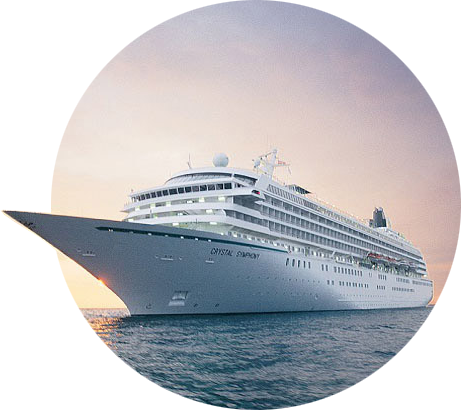
Ocean cruising, river cruising, yacht charters, expeditions, Royal Caribbean, Norwegian, Viking, Lindblad, there are so many options when it comes to cruising
We create custom travel itineraries and trips, and we know travel - Whether it's Universal, river cruises, safaris, yacht charters, Australia, Thailand and more!
Get A Free QuoteWe serve customers all across the USA
Debt free and in business since 2013. Vincent Vacations has agents in Dallas, Kansas City, Houston, Shreveport, Little Rock, Roswell, Oklahoma City and more locations.

Travel agents can help save time and stress by doing the research and handling all your bookings for you. An experience travel agent is best at finding great deals and packages, as well as providing you with helpful information and tips. They can also help you plan special activities and experiences that you may not have thought of on your own. All in all, using a travel agent can be a great way to make sure you get the most out of your trip.
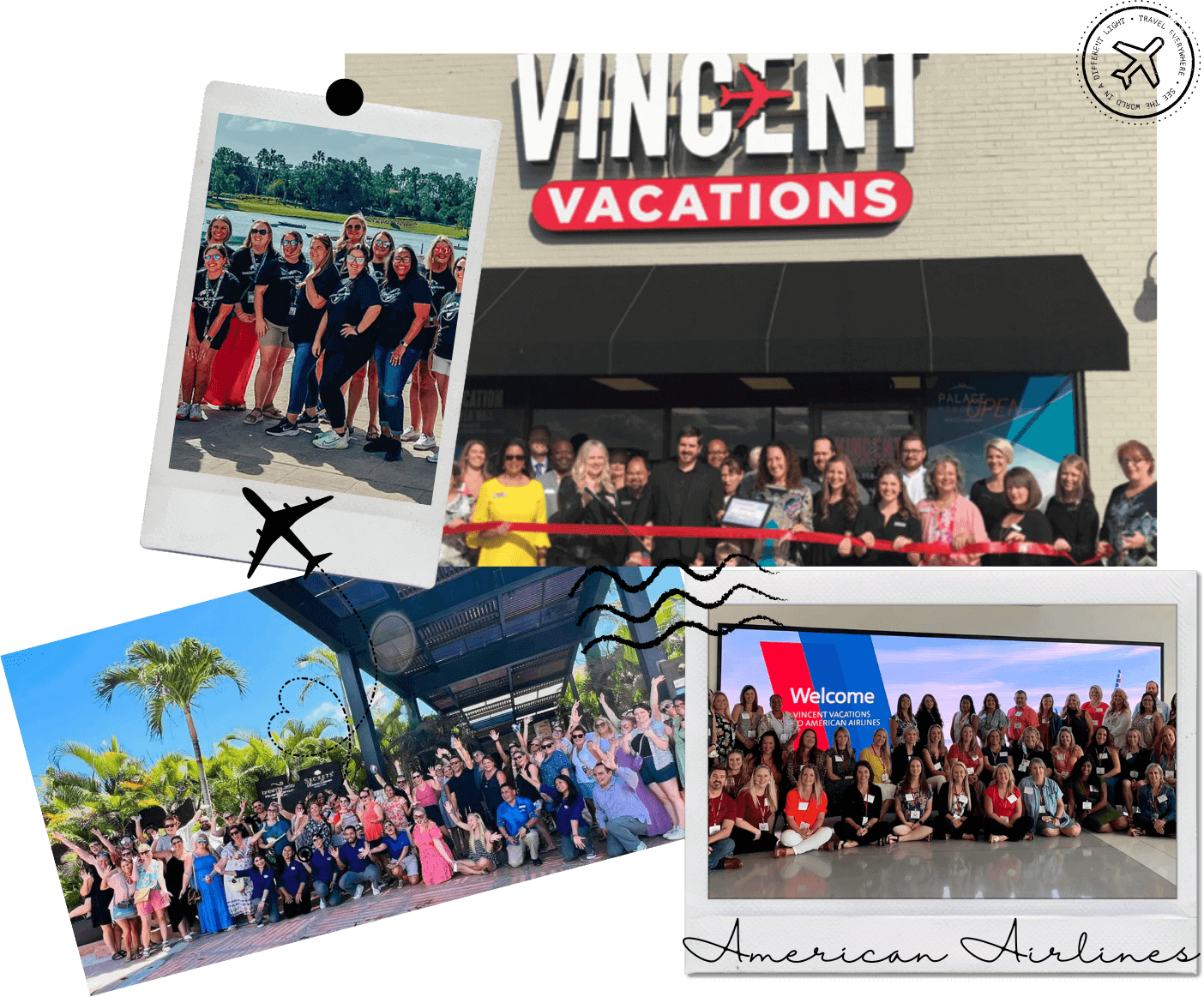
In travel since 2002, and in business since 2013, our travel team serves clients all over the US! Planning a vacation away from home takes a great team. We have taken the time to build a team of dedicated, smart, hard-working personnel who are each committed to excellence and service. We work side-by-side, creating and ensuring INCREDIBLE vacation experiences for you and your group. Our store front in-office team, and our travel consultant independent contractors, work all around the US.


In business since 2013, we are your #1 source for travel!
Free Vacation Package Quote