New Zealand
We recognize that cruise vacations are not just an investment, but often the highlights of our lives, and we take that responsibility seriously. We want to ensure you have the best vacation experience.
Interested in a job in travel? Click here to learn: How to Become a Cruise Travel Agent
100% custom to your needs! We handle flights, pre and post travel, transfers, excursions and more, no matter if it's a solo trip or a large group! Contact us today for a custom curated FREE cruise vacation package quote.
Why BOOK with us?
We partner with cruise lines to bring you the best value!
 CLIA Certified (Cruise Lines International Association)
- THE BEST Onboard Credits and Perks
- Access to Exclusive Deals and Discounts
- Price Monitoring and Adjustments
- Bundled Custom Packages
- Flights, pre- and post-cruise hotel stays, transfers, excursions all-in-one saving you time and money
- Dedicated Support
- Our Agents are ASTA Verified Travel Advisors (VTA)
- Tailored Recommendations
- Time Savings
- We Handle the Complexities
- Assistance with Issues
- Positive Reviews and Referrals
- Years of Experience
There is a moment, as you glide into Sydney Harbour, when the world seems to hold its breath. The first glimpse of the Harbour Bridge, a colossal steel arch against the cerulean sky, is swiftly followed by the iconic, shell-like sails of the Opera House. It’s a travel-poster image brought to life, a moment etched in the memory of every traveller who has witnessed it. But as a seasoned travel journalist, I can assure you of this: this spectacular overture is merely the opening note in a grand symphony of discovery that awaits in Australia and New Zealand. To truly appreciate the rich, complex, and soul-stirring composition of the Antipodes, you need a vessel that matches its grandeur. You need a voyage with Cunard.
For over two decades, I’ve sailed the world’s oceans, stepping aboard everything from intimate river yachts to colossal floating cities. Yet, certain names still resonate with a unique gravitas, a whisper of a bygone era of travel. Cunard is one such name. It evokes images of transatlantic crossings, Art Deco ballrooms, and a standard of service that feels both timeless and impeccably British. But when you pair this legendary line with the dramatic, sun-drenched landscapes of Australia and the mythical beauty of New Zealand, a question naturally arises for the discerning traveler: Is it truly worth the hype?
There is a corner of the world where landscapes are painted on a scale so grand, they seem to defy reality. A place where ancient cultures whisper on the breeze, vibrant cities hum with creative energy, and nature’s masterpieces—from sun-drenched coastlines to majestic, ice-carved fiords—unfold in a breathtaking panorama. This is the realm of Australia and New Zealand, a destination that calls to the heart of every true traveler. And there is simply no more civilized, elegant, or profoundly memorable way to answer that call than aboard a Cunard ocean liner.
There’s a moment, just as the sun dips below the vast expanse of the Tasman Sea, when the sky ignites in a blaze of crimson and gold. The air, crisp and tasting of salt, carries the distant call of a seabird. You’re standing on your private balcony, a glass of chilled Sauvignon Blanc in hand, watching the world’s most dramatic coastline drift by. This isn’t a dream. This is the reality of exploring Australia and New Zealand by sea, and it’s an experience that redefines the very essence of travel.
There are moments in travel that etch themselves into your soul. The first glimpse of a landscape so immense, so profoundly wild, it recalibrates your sense of scale. Imagine standing on your private balcony, a warm coffee in hand, as your ship glides silently into New Zealand's Fiordland National Park. Waterfalls, thousands of feet high, cascade down sheer granite cliffs, their mist kissing the deep, dark waters below. This isn’t a scene from a documentary; it’s your Tuesday morning.
The very thought of it sends a thrill down your spine, doesn't it? The sun-drenched coastlines of Australia, the mythical fjords of New Zealand, and the endless blue of the Pacific Ocean. An adventure to the lands Down Under is more than a vacation; it's a pilgrimage for the soul, a journey to the other side of the world where vibrant cities and staggering natural beauty coexist. Aboard a magnificent Carnival cruise ship, you have a floating resort that carries you effortlessly between these two epic destinations.
Imagine the gentle lapping of the Tasman Sea against the hull, a glass of crisp Sauvignon Blanc in hand as the sun dips below the horizon, painting the sky in hues of fire and gold. Ahead lies another day of discovery, not just a fleeting glimpse, but a deep, meaningful connection with one of the most breathtaking corners of our planet. This isn't just a vacation; it's an immersion. This is the promise of exploring Australia and New Zealand with Azamara Cruises.
The scent of eucalyptus hung in the warm air, a distinctly Australian perfume mixing with the salty tang of Sydney Harbour. Below my verandah, the iconic white sails of the Opera House gleamed, looking less like a building and more like a modernist sculpture set against a sapphire sea. This wasn't a postcard; this was my reality for the next sixteen days. For years, I’d written about the world’s most exclusive journeys, but the promise of an Azamara cruise through Australia and New Zealand felt different. It wasn’t about ticking boxes. It was about immersion.
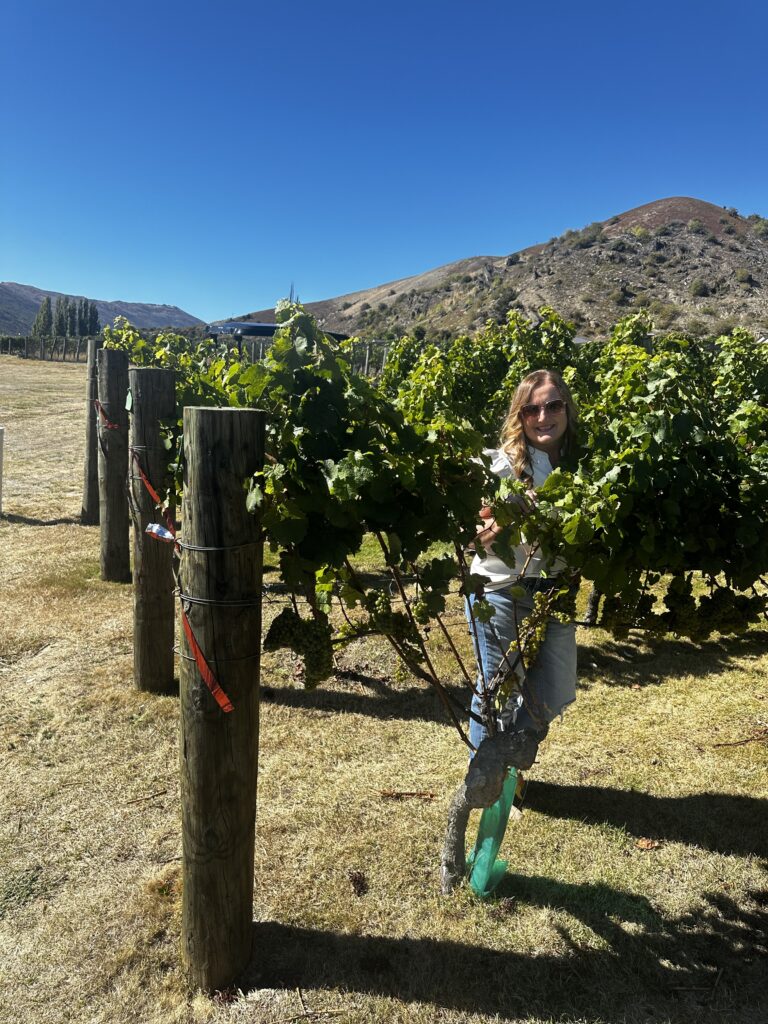
Imagine the scent of eucalyptus on a warm breeze, the staggering, silent majesty of a fjord carved by ancient glaciers, and the taste of a world-class Sauvignon Blanc enjoyed on the very vineyard where it was grown. This is not a collection of disparate holidays; it is a single, seamless journey through the lands Down Under. For the discerning traveler, the question isn't if one should explore the staggering beauty of Australia and New Zealand, but how. The answer, for those who value depth over breadth and immersion over observation, is unequivocally with Azamara.
>
South Pacific > New Zealand
Brought to you by Tourism New Zealand
Free New Zealand Vacation Package Quote
Amazing new experiences are just one flight away.
New Zealand is a destination where everything’s close - dramatic natural scenery that will dazzle you with movie set good looks, adventures around every corner, and a warm, genuine hospitality that stays with you long after your flight home.
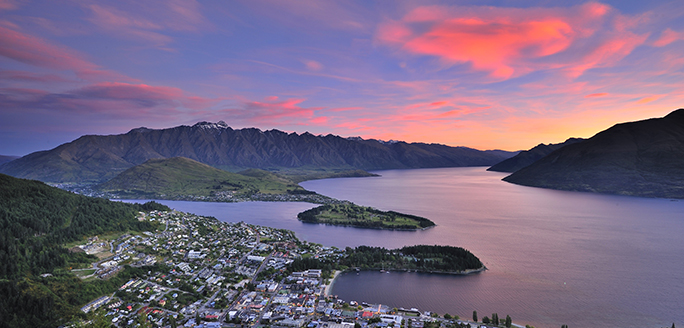
Where it’s safe, friendly and easy to get around. Where you can wake up in a vibrant city, take in soaring mountain peaks, lush green valleys and inviting pastures – then drift asleep to the song of the ocean.
Whether you’re escaping to an uncrowded beach or immersed in the soothing waters of a hidden thermal spring – you’ll find an incredible choice of things to do. Adrenaline seekers and nature lovers can leap head first into outdoor adventures, the curious can connect with the unique Māori culture, and the hardworking can find total seclusion and pure relaxation. Food lovers can savor fresh, locally sourced produce, matched with delicious world-class wines.
Say farewell, and leave feeling like one of the whānau (family) carrying a lifetime of incredible memories to share.
Wake up in paradise.
New Zealand's stunning landscapes and friendly locals are closer than you think. Wake up in a place where something new awaits you every day.

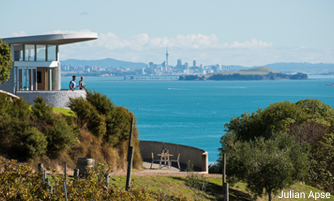
Auckland
If you love wine, you’ll adore Te Whau on Waiheke Island. You can enjoy a winery tour with tastings of award-winning red wines, and then make yourself comfortable in the restaurant. Critics get hugely excited about Te Whaus food, which has resulted in a long list of awards. Te Whau is a wow in every way.
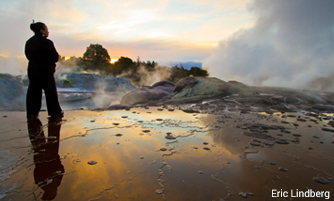
Rotura
The geothermal magic of Rotorua is an easy drive from Auckland and Te Puia is the perfect starting point for local explorations. You can discover geysers, boiling mud, hot springs and Maori culture in one extraordinary location. The experience is even better with a Maori guide. You'll hear amazing stories that have been handed down through generations.
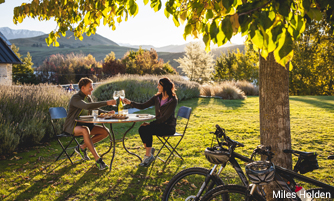
Queenstown
When you're biking the Queenstown Trail, enticing food and wine opportunities pop up at regular intervals. Pause for a while to enjoy a wine and a platter of delicious local produce. It's exactly what you need to fuel the next leg of your Southern Lakes cycling adventure.
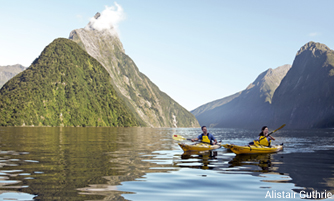
Milford Sound
Carved by glaciers over thousands of years, Fiordland is a world of deep waters, tall peaks and waterfalls. Milford Sound can be explored by cruise boat or sea kayak. There’s also a network of walking tracks in the area, including the world famous Milford Track. Most visitors use the lake town of Te Anau as a base for explorations.
Free New Zealand Vacation Package Quote
Categories: Asia Pacific >
South Pacific > New Zealand
Overview
Introduction
New Zealanders sometimes refer to their country as "God Zone," a rather prideful twist on the phrase "God's Own." But if you like gorgeous scenery and gutsy people, you'll agree with them. New Zealand is blessed with some of the most varied and dramatic terrain in the world—from glaciers, fjords and beaches to mountains, meadows and rain forests, known to New Zealanders as "native bush." If you're so inclined, you can admire the breathtaking scenery while skiing, surfing, horseback riding, mountain climbing, hiking (which the locals call "tramping") or kayaking.
And if those pursuits aren't exciting enough, you can try some of the adventures the Kiwis (as New Zealanders are called) have invented: You can bungee jump off cliffs or bridges; paddle through white-water rapids; rocket through narrow caverns on jet boats; or strap yourself inside a giant plastic ball and roll down a hillside.
If you prefer more leisurely activities, you can still enjoy New Zealand's natural wonders by strolling on its pristine beaches, sailing along its picturesque coastline or fishing in its crystal clear rivers and lakes.
Geography
New Zealand consists of two large islands (called the North Island and the South Island), as well as numerous small islands. Both major islands are mountainous with coastal plains. The North Island is more populated and has a warmer, temperate climate, along with vigorous geothermal areas and active volcanoes. The South Island has a more open, spacious feel with spectacular fjords, glaciers, agricultural plains, and hundreds of streams and lakes.
History
Many historians designate 800-1350 as a likely time frame for the Maori (pronounced MAU-ree) settlement of New Zealand. The Maori called their new home Aotearoa (Land of the Long White Cloud), and their oral history recounts how they took a large fleet of canoes from a place called Hawaiiki (perhaps a set of islands in French Polynesia) to sail to what is now New Zealand. For hundreds of years, Maori life went untouched by the outside world. They had spectacularly elaborate body and face tattoos and maintained a culture of fishing, hunting and gathering. Rival tribes warred with one another, and the battles often resulted in the losers being eaten or enslaved by the victors.
The next epoch in the islands' history opened in 1642, when Dutch explorer Abel Tasman sighted the land and called it "Niuew Zeeland." He charted part of the coastline but left without officially claiming it after some of his men were killed by Maori. Some 130 years later, Capt. James Cook claimed the islands for the British crown. He circumnavigated both main islands, which he mapped with an accuracy that is still admired (and used) today.
Once European settlement began in earnest, the introduction of muskets and other weapons to the Maori led to fierce intertribal wars, which—in addition to new European diseases—nearly wiped out their population. Calm ensued by the 1830s, however, and in 1840, a conditional alliance between the Maori and the British, called the Treaty of Waitangi, acknowledged British sovereignty in exchange for some Maori land rights. Despite being signed by more than 500 Maori chiefs, it was a controversial document. It was only after several subsequent decades of bloody war over these land rights that an easier coexistence—which persists to this day—evolved.
From the 1860s to the 1880s, gold fever drew thousands of prospectors to New Zealand. About the same time, large sheep farms began to be established on land cleared from the native forests. The country became autonomous in 1907 and is today an independent member of the Commonwealth of Nations.
Snapshot
Everyone should visit New Zealand at least once. The country's foremost attractions include great natural beauty, mountains and glaciers, rain forests, beaches, bright blue skies, fjords, fishing, sailing, surfing, scuba diving, skiing, golf, hiking, thermal baths, wildlife and sheep, friendly people, Maori culture, vineyards and fresh seafood.
Potpourri
There are 33.9 million sheep in New Zealand, a major reduction from the peak of nearly 70 million in 1981.
Sir Edmund Hillary, a New Zealander, and his Sherpa fellow climber, Tenzing Norgay, were the first men to reach the summit of Mount Everest in 1953.
In 1893, New Zealand became the first country in the world to grant women the right to vote in parliamentary elections.
Fiordland National Park stretches out for nearly 3 million acres/1.2 million hectares.
The flightless, herbivorous moa is New Zealand's most famous extinct bird. There were several types, with the largest reaching heights of 14 ft/3.5 m and weighing more than 450 lbs/200 kg. Their flesh was an important part of the Maori diet; they were killed off by over-hunting long before Europeans arrived.
Manukau City to the south of Auckland has about 160 ethnic groups based there.
The All Blacks, New Zealand's national rugby team, is revered worldwide for its skill and the intimidating Maori haka, a warrior dance used to begin each match. In 2011, the All Blacks won the Rugby World Cup at the tournament held in New Zealand.
According to Maori legend, New Zealand's North Island was a great fish hooked by Maui, a heroic demi-god figure who appears in many Maori legends. The South Island was his canoe and Stewart Island his anchor. Therefore the North Island's name in Maori is Te Ika a Maui, the fish of Maui, and Stewart Island Te Puka o te Waka a Maui, the anchor stone of the canoe of Maui. And while the South Island is thought of as Maui's waka, or canoe, its name is Te Wai Ponamu, the waters of Ponamu (or greenstone) in acknowledgment of places on the island where the deep-green stone, valued for weapons, tools and ornaments, was sourced.
Our favorite place name in New Zealand is Taumatawhakatangihangakoauauotamateaturipukakapikimaungahoronukupokaiwhenuakitanatahu, a coastal hill 60 mi/95 km south of Napier, on the North Island. The name is shortened to Taumata in conversation. It means, "The brow of a hill where Tamatea, the man with the big knees, who slid, climbed and swallowed mountains, known as the Land Eater, played his flute to his lover."
The kiwi is a flightless native bird about the size of a large chicken and, relative to its body size, lays the largest egg of any bird—up to 20% of its body weight. There are six varieties of kiwi; females are always larger and more aggressive than the males. They are active at night, sniffing out worms using tiny nostrils at the end of their long beaks.
New Zealand's Antipodes Islands (from the Greek anti—opposite—and podes—feet) are so named because, on a globe, they are almost precisely opposite England.
When people say kia ora (pronouned kee-a or-a), they are offering an informal greeting in Maori that can be used instead of hello.
New Zealand's "living dinosaur," the Tuatara lizard, has a third eye, an organ under its skin in the middle of the head, which is sensitive to light.
Read More
Travel Tips:
Australia and New ZealandTravel Tips:
Outdoor Odysseys in Australia & New ZealandTravel Tips:
Vintage New Zealand - The Wines of New Zealand
Categories: Asia Pacific >
South Pacific > New Zealand
Brought to you by Tourism New Zealand
Free New Zealand Vacation Package Quote
Amazing new experiences are just one flight away.
New Zealand is a destination where everything’s close - dramatic natural scenery that will dazzle you with movie set good looks, adventures around every corner, and a warm, genuine hospitality that stays with you long after your flight home.
Where it’s safe, friendly and easy to get around. Where you can wake up in a vibrant city, take in soaring mountain peaks, lush green valleys and inviting pastures – then drift asleep to the song of the ocean.
Whether you’re escaping to an uncrowded beach or immersed in the soothing waters of a hidden thermal spring – you’ll find an incredible choice of things to do. Adrenaline seekers and nature lovers can leap head first into outdoor adventures, the curious can connect with the unique Māori culture, and the hardworking can find total seclusion and pure relaxation. Food lovers can savor fresh, locally sourced produce, matched with delicious world-class wines.
Say farewell, and leave feeling like one of the whānau (family) carrying a lifetime of incredible memories to share.
Wake up in paradise.
New Zealand's stunning landscapes and friendly locals are closer than you think. Wake up in a place where something new awaits you every day.
Auckland
If you love wine, you’ll adore Te Whau on Waiheke Island. You can enjoy a winery tour with tastings of award-winning red wines, and then make yourself comfortable in the restaurant. Critics get hugely excited about Te Whaus food, which has resulted in a long list of awards. Te Whau is a wow in every way.
Rotura
The geothermal magic of Rotorua is an easy drive from Auckland and Te Puia is the perfect starting point for local explorations. You can discover geysers, boiling mud, hot springs and Maori culture in one extraordinary location. The experience is even better with a Maori guide. You'll hear amazing stories that have been handed down through generations.
Queenstown
When you're biking the Queenstown Trail, enticing food and wine opportunities pop up at regular intervals. Pause for a while to enjoy a wine and a platter of delicious local produce. It's exactly what you need to fuel the next leg of your Southern Lakes cycling adventure.
Milford Sound
Carved by glaciers over thousands of years, Fiordland is a world of deep waters, tall peaks and waterfalls. Milford Sound can be explored by cruise boat or sea kayak. There’s also a network of walking tracks in the area, including the world famous Milford Track. Most visitors use the lake town of Te Anau as a base for explorations.
Free New Zealand Vacation Package Quote
Categories: Asia Pacific >
South Pacific > New Zealand
Overview
Introduction
New Zealanders sometimes refer to their country as "God Zone," a rather prideful twist on the phrase "God's Own." But if you like gorgeous scenery and gutsy people, you'll agree with them. New Zealand is blessed with some of the most varied and dramatic terrain in the world—from glaciers, fjords and beaches to mountains, meadows and rain forests, known to New Zealanders as "native bush." If you're so inclined, you can admire the breathtaking scenery while skiing, surfing, horseback riding, mountain climbing, hiking (which the locals call "tramping") or kayaking.
And if those pursuits aren't exciting enough, you can try some of the adventures the Kiwis (as New Zealanders are called) have invented: You can bungee jump off cliffs or bridges; paddle through white-water rapids; rocket through narrow caverns on jet boats; or strap yourself inside a giant plastic ball and roll down a hillside.
If you prefer more leisurely activities, you can still enjoy New Zealand's natural wonders by strolling on its pristine beaches, sailing along its picturesque coastline or fishing in its crystal clear rivers and lakes.
Geography
New Zealand consists of two large islands (called the North Island and the South Island), as well as numerous small islands. Both major islands are mountainous with coastal plains. The North Island is more populated and has a warmer, temperate climate, along with vigorous geothermal areas and active volcanoes. The South Island has a more open, spacious feel with spectacular fjords, glaciers, agricultural plains, and hundreds of streams and lakes.
History
Many historians designate 800-1350 as a likely time frame for the Maori (pronounced MAU-ree) settlement of New Zealand. The Maori called their new home Aotearoa (Land of the Long White Cloud), and their oral history recounts how they took a large fleet of canoes from a place called Hawaiiki (perhaps a set of islands in French Polynesia) to sail to what is now New Zealand. For hundreds of years, Maori life went untouched by the outside world. They had spectacularly elaborate body and face tattoos and maintained a culture of fishing, hunting and gathering. Rival tribes warred with one another, and the battles often resulted in the losers being eaten or enslaved by the victors.
The next epoch in the islands' history opened in 1642, when Dutch explorer Abel Tasman sighted the land and called it "Niuew Zeeland." He charted part of the coastline but left without officially claiming it after some of his men were killed by Maori. Some 130 years later, Capt. James Cook claimed the islands for the British crown. He circumnavigated both main islands, which he mapped with an accuracy that is still admired (and used) today.
Once European settlement began in earnest, the introduction of muskets and other weapons to the Maori led to fierce intertribal wars, which—in addition to new European diseases—nearly wiped out their population. Calm ensued by the 1830s, however, and in 1840, a conditional alliance between the Maori and the British, called the Treaty of Waitangi, acknowledged British sovereignty in exchange for some Maori land rights. Despite being signed by more than 500 Maori chiefs, it was a controversial document. It was only after several subsequent decades of bloody war over these land rights that an easier coexistence—which persists to this day—evolved.
From the 1860s to the 1880s, gold fever drew thousands of prospectors to New Zealand. About the same time, large sheep farms began to be established on land cleared from the native forests. The country became autonomous in 1907 and is today an independent member of the Commonwealth of Nations.
Snapshot
Everyone should visit New Zealand at least once. The country's foremost attractions include great natural beauty, mountains and glaciers, rain forests, beaches, bright blue skies, fjords, fishing, sailing, surfing, scuba diving, skiing, golf, hiking, thermal baths, wildlife and sheep, friendly people, Maori culture, vineyards and fresh seafood.
Potpourri
There are 33.9 million sheep in New Zealand, a major reduction from the peak of nearly 70 million in 1981.
Sir Edmund Hillary, a New Zealander, and his Sherpa fellow climber, Tenzing Norgay, were the first men to reach the summit of Mount Everest in 1953.
In 1893, New Zealand became the first country in the world to grant women the right to vote in parliamentary elections.
Fiordland National Park stretches out for nearly 3 million acres/1.2 million hectares.
The flightless, herbivorous moa is New Zealand's most famous extinct bird. There were several types, with the largest reaching heights of 14 ft/3.5 m and weighing more than 450 lbs/200 kg. Their flesh was an important part of the Maori diet; they were killed off by over-hunting long before Europeans arrived.
Manukau City to the south of Auckland has about 160 ethnic groups based there.
The All Blacks, New Zealand's national rugby team, is revered worldwide for its skill and the intimidating Maori haka, a warrior dance used to begin each match. In 2011, the All Blacks won the Rugby World Cup at the tournament held in New Zealand.
According to Maori legend, New Zealand's North Island was a great fish hooked by Maui, a heroic demi-god figure who appears in many Maori legends. The South Island was his canoe and Stewart Island his anchor. Therefore the North Island's name in Maori is Te Ika a Maui, the fish of Maui, and Stewart Island Te Puka o te Waka a Maui, the anchor stone of the canoe of Maui. And while the South Island is thought of as Maui's waka, or canoe, its name is Te Wai Ponamu, the waters of Ponamu (or greenstone) in acknowledgment of places on the island where the deep-green stone, valued for weapons, tools and ornaments, was sourced.
Our favorite place name in New Zealand is Taumatawhakatangihangakoauauotamateaturipukakapikimaungahoronukupokaiwhenuakitanatahu, a coastal hill 60 mi/95 km south of Napier, on the North Island. The name is shortened to Taumata in conversation. It means, "The brow of a hill where Tamatea, the man with the big knees, who slid, climbed and swallowed mountains, known as the Land Eater, played his flute to his lover."
The kiwi is a flightless native bird about the size of a large chicken and, relative to its body size, lays the largest egg of any bird—up to 20% of its body weight. There are six varieties of kiwi; females are always larger and more aggressive than the males. They are active at night, sniffing out worms using tiny nostrils at the end of their long beaks.
New Zealand's Antipodes Islands (from the Greek anti—opposite—and podes—feet) are so named because, on a globe, they are almost precisely opposite England.
When people say kia ora (pronouned kee-a or-a), they are offering an informal greeting in Maori that can be used instead of hello.
New Zealand's "living dinosaur," the Tuatara lizard, has a third eye, an organ under its skin in the middle of the head, which is sensitive to light.
Read More
Travel Tips:
Australia and New ZealandTravel Tips:
Outdoor Odysseys in Australia & New ZealandTravel Tips:
Vintage New Zealand - The Wines of New Zealand
Perth (Fremantle)/Darwin
Departure
August 20, 2026
Ship
Silver Cloud
Length
17 Nights
Perth (Fremantle)/Santiago (Valparaiso)
Departure
August 20, 2026
Ship
Silver Cloud
Length
77 Nights
Perth (Fremantle)/Lautoka
Departure
August 20, 2026
Ship
Silver Cloud
Length
40 Nights
Vancouver/Juneau
Departure
August 21, 2026
Ship
Seabourn Encore
Length
7 Nights
Roundtrip Vancouver
Departure
August 21, 2026
Ship
Seabourn Encore
Length
14 Nights
Vancouver/Auckland
Departure
August 27, 2026
Ship
Azamara Pursuit
Length
114 Nights
Roundtrip Vancouver
Departure
September 4, 2026
Ship
Seabourn Encore
Length
14 Nights
Vancouver/Juneau
Departure
September 4, 2026
Ship
Seabourn Encore
Length
7 Nights
Vincent Vacations - Authorized New Zealand Vacation Planner
Questions? Call us at
1 (888) 883-0460
No-Obligation New Zealand Vacation Quote Request Form
Free Cruise Package Quote
New Zealand Deals
Contact us for the latest New Zealand deals.
For groups of 10
or more rooms, or 8 or more cabins, please use our Group Form
Click Here for our Group Department