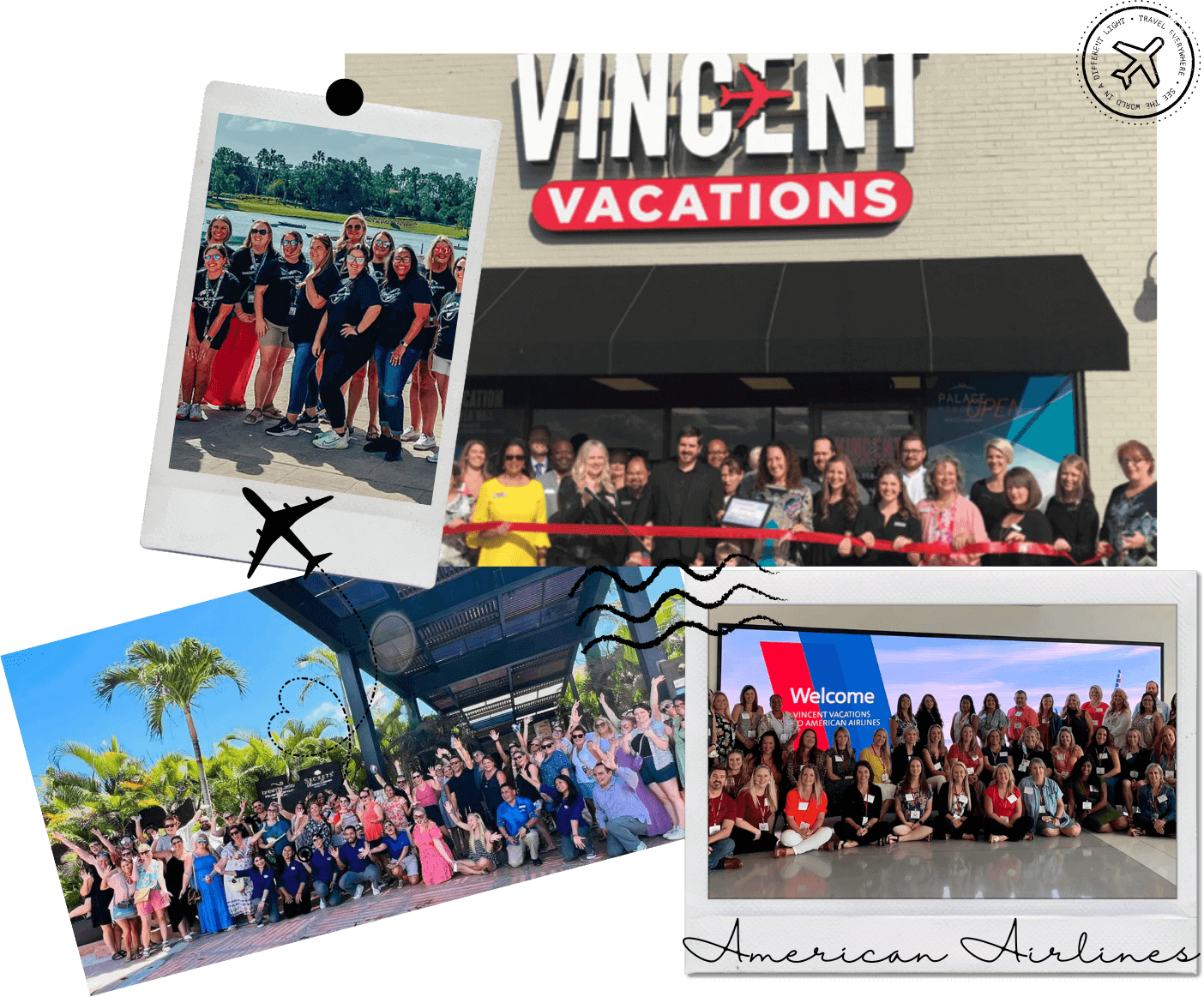
At Vincent Vacations, we help you plan the perfect escape inspired by Suppliers/pennsylvania. Our experts possess firsthand destination knowledge and direct connections with top-tier suppliers. Let us design a highly personalized itinerary tailored specifically to your Suppliers/pennsylvania travel goals.
Overview
Introduction
Pennsylvania was dubbed the Keystone State because of geography: It lay between five other former colonies when the U.S. was newly formed and seemed to physically lock the country together. But its nickname could equally apply to Pennsylvania's key role in the history and development of the U.S. from colonial times to the present. Appropriately, history is what draws many travelers to the state today.
At Valley Forge, you can see the place where the Continental Army weathered a tough winter and formed the fighting unit that would win the country's independence. At Gettysburg, tour the grounds where perhaps the most important battle in the nation's history was waged. And in Scranton, you can come to a better understanding of the industrial capabilities that helped make the U.S. a world power.
Those less interested in historical sites won't be left out, however. The mountains that run across the state create beautiful vistas and play host to the resort playground of the Poconos and the outdoor activities of the Laurel Highlands. Philadelphia and Pittsburgh provide big-city cultural and entertainment possibilities, and rural getaways such as Bucks County and the Brandywine Valley mix scenic countryside with affluent living. For visitors who want to learn more about the past and those who prefer to simply enjoy the present, Pennsylvania has much to offer.
Geography
Pennsylvania is known for the ridges, valleys and mountains that run from southwest to northeast. To the west of the mountains are the hills of western Pennsylvania. On the other side of the mountains, in the southeastern corner of the state, is a small area of lowlands that borders Delaware and New Jersey.
History
Native American tribes entered the area several thousand years ago. At the time of European contact, the principal tribes were the Delaware (Lenape), Susquehannock and Erie. Most of them relied on raising corn and hunting.
The first Europeans arrived in the early 1600s. Both the English and Dutch traded along the Delaware River (Pennsylvania's eastern boundary), establishing temporary posts, but the Swedes were the first Europeans to settle permanently on the river, southwest of what is now Philadelphia, near present-day Wilmington, Delaware.
King Charles II of England granted William Penn a colonial charter in 1681. His "Holy Experiment" in the New World called for free government by free men and treated the Native Americans as brothers. Soon people of other oppressed religions came to Pennsylvania, including large colonies of Mennonites and Amish (of Swiss and German stock, now known as the Pennsylvania Dutch) and many of Welsh and Scotch-Irish heritage.
The founding fathers chose Philadelphia as the site for the adoption of the Declaration of Independence in 1776 and the U.S. Constitution in 1787. Many of the battles of the Revolutionary War were fought in Pennsylvania, most notably at Brandywine, Fort Mifflin and Germantown, and Valley Forge became immortalized as the place where Washington's army proved its resilience. During the Civil War, the Battle of Gettysburg (July 1863), where Gen. Robert E. Lee's second invasion of the North was turned back, turned out to be one of the war's pivotal engagements. (It also inspired one of the great political speeches in U.S. history, Abraham Lincoln's Gettysburg Address.)
In the 1800s and 1900s, Pennsylvania became an important center of U.S. industry, with the processing of iron and steel in such cities as Pittsburgh, Bethlehem and Johnstown. Even with the decline of that industry, the state maintains an integral role in business and manufacturing.
Snapshot
Pennsylvania's main attractions include U.S. history, Pennsylvania Dutch country, Valley Forge, Gettysburg, Pittsburgh, Philadelphia, camping, hunting, fishing, museums and cultural events, the Brandywine Valley and the Laurel Highlands.
Almost everyone will find something of interest in Pennsylvania, especially those who enjoy peaceful, relaxing scenery, historical sites and outdoor activities.
Potpourri
When the Constitution was being drafted inside Philadelphia's Independence Hall during the summer of 1787, the windows were shut tight—despite the sweltering heat—to keep eavesdroppers from overhearing the discussions and debates.
The world's largest glacial pothole, caused by receding glacial waters from the past ice age 15,000 years ago, is outside the small town of Archbald near Scranton.
Technically, the U.S. has only 46 states. Pennsylvania and three others (Kentucky, Massachusetts and Virginia) are commonwealths.
There is still a law on the books in Pennsylvania that prohibits singing in the bathtub.
Pennsylvania is home to the nation's first hospital, library, zoo, newspaper, magazine, nation's Capitol, TV and radio broadcasts, educational public TV station, cable TV, paper mill, pharmacist and high-speed multilane highway.
The oldest roller coaster in the U.S. is in Altoona. It was constructed in 1902 and completely restored in 1999.
William Penn wasn't given the right to settle Pennsylvania as a gift: The British crown owed him money—the result of a loan his father had made—and Penn took the charter in place of the cash.
Streetlights in Hershey are alternately shaped like wrapped and unwrapped Hershey's Kisses chocolates.
Doesn't matter where you're from: The Amish will refer to you as "English."
Surprisingly enough, the Pennsylvania Dutch aren't Dutch at all, but rather Germans and German-speaking Swiss. Locals mistook the word Deutsch (which means "German") for "Dutch."
The Slinky, Cracker Jacks, Tastycakes, the Big Mac, the Ferris wheel and the banana split were all invented in Pennsylvania.
Overview
Introduction
In the southeastern part of Pennsylvania 65 mi/105 km west of Philadelphia (centered on the city of Lancaster), this pretty, rural area of rolling hills is home to members of three religious communities: the Amish, the Moravians and the Mennonites, all of whom practice a lifestyle of prayerful devotion through unadorned living. (Although the term "Pennsylvania Dutch" is often used to describe them, their forebears were not Dutch but German and Swiss. The term "Amish Country" is also used to describe the area.)
The very religious and conservative Amish forgo modern conveniences (including electricity and automobiles) in favor of a simple, formal way of living that makes use of hand tools, horses and modest black clothing. The Moravians and Mennonites practice less austere regimens, but they, too, are distinguished by a lack of ostentation.
Though all three of these groups have distanced themselves from modern society, they have not rejected the income that can be derived from those who are interested in their lifestyle. The Lancaster area has many attractions, including more than 25 museums. Bring yourself up to speed on the history and culture of the Amish at the Mennonite Information Center in Lancaster, where personal tours of Amish country are available.
Also check out the Railroad Museum of Pennsylvania in Strasburg, where visitors can take a ride on the country's oldest operating short-line railroad. Other stops include Wheatland, the estate of former U.S. President James Buchanan; the People's Place Quilt Museum in Intercourse; the Amish Farm and House (lecture tour of a working farm with a residence built in 1805); the Hans Herr House (oldest Mennonite meetinghouse in the U.S.); and the Ephrata Cloister in Ephrata, which features 10 unusual buildings dating back to the 1700s. Take the Amish Country tours for a delightful look at many of the region's farms.
Or if you prefer to shop, head 15 mi/24 km northeast of Ephrata to West Chester, home of the TV shopping network QVC. There you can take a tour that includes a glimpse of the live show and, of course, shop in the Studio Store.
There are many restaurants and shops specializing in the food and handicrafts of the groups. (The Amish are known for their beautiful quilts.) You are also likely to see the Pennsylvania Dutch selling items at roadside stands or from their homes.
Most visitors to the area stay in small local hotels and charming bed-and-breakfasts (you can choose from more than 150 in the area).
At Vincent Vacations, we design bespoke travel experiences that combine luxury resort properties with custom private tours and expert local guides, guaranteeing an extraordinary vacation.
Contact us for the latest Pennsylvania deals.