Planning your next getaway should be just as relaxing as the vacation itself. When looking for a Wisconsin travel advisor, you need more than just an order-taker—you want a well-connected expert who can unlock VIP perks, save you valuable time, and handle every detail from departure to return. Vincent Vacations provides you with elite industry credentials, global connections, and premier partnerships to guarantee a flawless trip.
Our advisors hold the highest tier of professional credentials, ensuring your trip is managed by true industry experts:
| Certification | Issuing Body | What it Means for You |
|---|---|---|
| CTC (Certified Travel Counselor) | The Travel Institute | The highest tier of certification. It requires a minimum of five years of full-time industry experience and the completion of rigorous advanced coursework. Consider this the master's degree of travel planning. |
| CTA (Certified Travel Associate) | The Travel Institute | A solid baseline credential indicating the advisor has at least a year of experience and has mastered travel industry fundamentals, geography, and sales skills. |
| VTA (Verified Travel Advisor) | ASTA (American Society of Travel Advisors) | ASTA is the industry's leading advocacy group. A VTA credential means our advisors have been trained specifically in ethics, legal compliance, and consumer protection. |
| ACC / MCC / ECC | CLIA (Cruise Lines International Association) | Our Accredited, Master, and Elite Cruise Counselors have completed extensive coursework, personally inspected ships, and sailed on multiple lines to recommend the perfect cruise for you. |
Vincent Vacations is a proud member of the invitation-only Signature Travel Network, a highly respected cooperative of the world's leading luxury travel agencies. Because of this elite partnership, we can pass exclusive VIP benefits and complimentary perks directly to you—usually for the exact same price you would pay booking directly online:
Our agency and advisors are regularly recognized on the world's most exclusive media lists. These accolades are fiercely vetted, based on customer reviews and industry connections, and cannot be bought:
For your peace of mind, Vincent Vacations is a fully registered, licensed, and bonded agency. We hold active registrations with IATA (International Air Transport Association) and ARC (Airlines Reporting Corporation), proving that our business is globally recognized and authorized to issue tickets and secure bookings directly.
Can't find your perfect cruise? See all the cruises to find the perfect vacation!
See ALL Caribbean Cruise Deals & OffersOur Wisconsin travel advisors specialize in crafting high-touch, custom itineraries that generic search engines cannot replicate. Below is a comparison of the premium travel experiences we coordinate for our clients:
| Specialty Category | Why Book With Our Specialists | Featured Client Itineraries |
|---|---|---|
| Bespoke Luxury Vacations | Fully customized, high-touch itineraries utilizing our relationships with upscale properties, private guides, and local experts for a completely unique journey. | Private guided tours of Japan; personalized East African safaris; custom European tours. |
| Wellness & Spa Retreats | Access to premier medical spas and exclusive wellness lodges where every treatment, diet, and program is tailored to your goals. | Luxury medical spas in Switzerland; exclusive yoga and meditation eco-lodges in Costa Rica. |
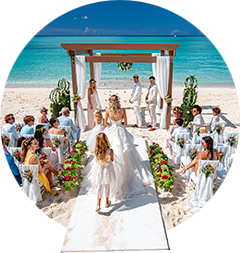
| Destination Weddings & Celebrations | Comprehensive group coordination, hotel room blocks, guest transfer logistics, and local vendor negotiation for a stress-free milestone event. | Exclusive resort buyouts in the Caribbean; historic villa weddings on the Amalfi Coast or Tuscany. |
| Adventure & Expedition Cruises | Access to ultra-luxury expedition vessels, private yacht charters, and remote destinations that require specialized booking connections. | Remote Arctic or Antarctic expeditions; private Galapagos yacht charters. |
| Elite River & World Cruises | Personalized ship selection, exclusive cabin upgrades, and custom shore excursions for long-duration global cruises. | Around-the-world voyages; luxury European small-ship river cruises. |
Can't find your perfect vacation? See all our land tours and packages!
See ALL Caribbean Tour Deals & Offers
Our professional travel curators in Wisconsin combine local expertise with worldwide supplier relationships to design extraordinary getaways. Whether you are planning a family reunion, a romantic escape, or an adventure tour, our Wisconsin specialists tailor every detail to match your preferences and budget.
Dreaming of a career in the travel industry? Discover how you can become a travel agent with our host agency program, or connect with our dedicated travel curators to book your next bespoke vacation.

Read article →
We recognize that vacations are not just an investment, but often the highlights of our lives, and we take that responsibility seriously. We want to ensure you have the best vacation experience. Interested in a job in travel? Click here to learn: How to Become a Travel Agent
Categories: Algoma
Categories: Apostle Islands National Lakeshore
Categories: Bayfield
Categories: Chippewa Falls
Categories: Door County
Categories: Great River Road
Categories: Green Bay
Categories: La Crosse
Categories: Lake Geneva
Categories: Lake Pepin WI
Categories: Madison WI
Categories: Manitowoc
Categories: Marinette
Categories: Milwaukee
Categories: Northwoods
Categories: Oshkosh
Categories: Pepin
Categories: Prairie du Chien
Categories: Sheboygan
Categories: Spring Green
Categories: Sturgeon Bay
Categories: Wisconsin Dells
Online booking platforms treat you like a transaction number. A Vincent Vacations local travel advisor in Wisconsin provides personal, 24/7 concierge support, coordinates complex flight and transfer logistics, and unlocks non-public amenities like resort upgrades and complimentary breakfasts.
Our certified advisors specialize in luxury custom vacations, all-inclusive beach resort packages, romantic destination weddings, Disney magic, family cruises, and complex European custom tours.
Our favorite coffee culture is in Wisconsin. Not lattes and cappuccinos, just good cups of strong hospitality that go hand-in-hand with our favorite memories of the state: sitting on the porch of a lakeside cabin, blowing steam into the cool air; pouring from a Thermos while floating in a canoe on a serene lake; washing down some homemade pie. Coffee isn't about waking up in Wisconsin. It's a way of slowing down and enjoying what's around you.
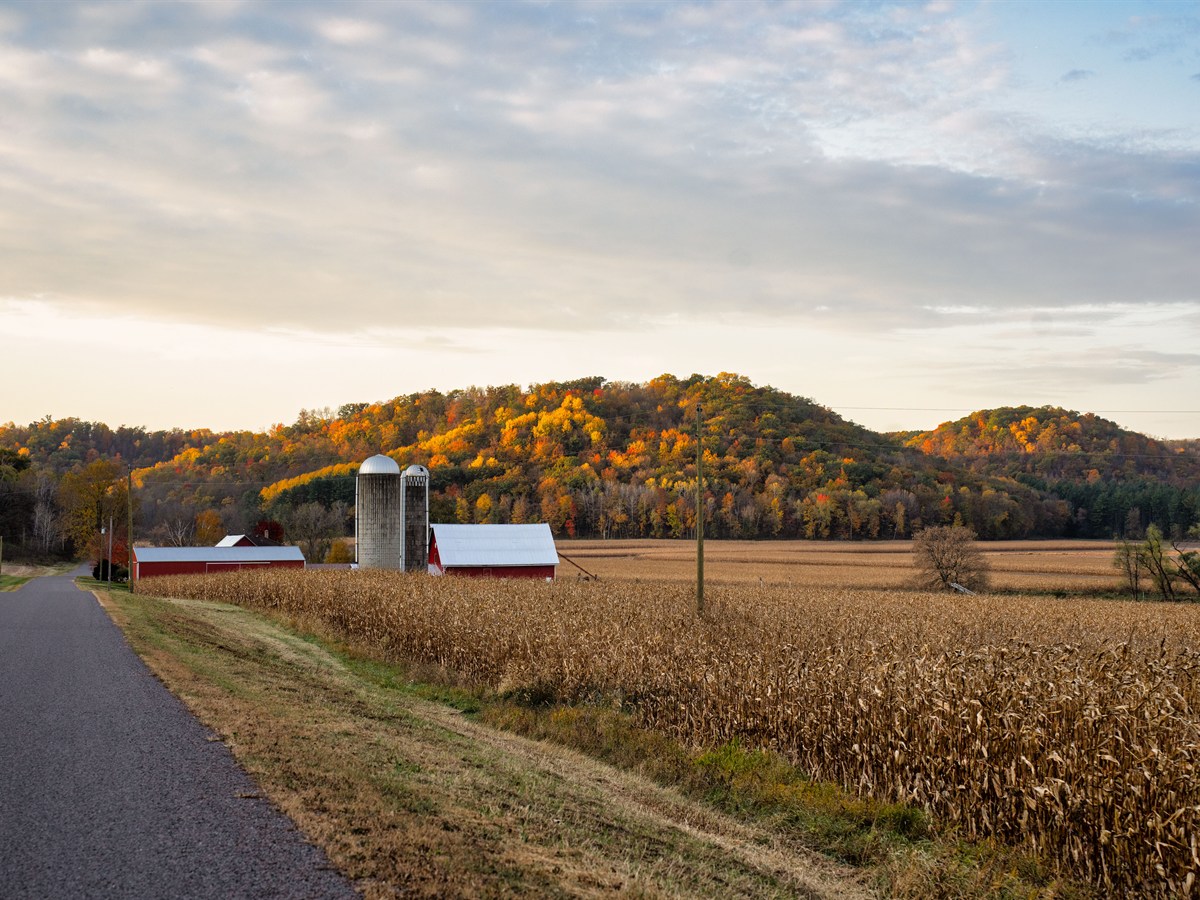
And there's plenty to enjoy: The scenery ranges from dramatic river bluffs, abundant forests, Great Lakes, lesser lakes and rolling pastures full of cattle. Milwaukee mixes fine museums with its blue-collar factories, and some fairly small towns—Spring Green and Richland Center—are graced by the architectural wonders of native son Frank Lloyd Wright.
Long before the era of modern architecture, Native Americans of the Effigy Mound Culture (AD 500—1100) created great earthen figures of birds, animals and people. Many of them can still be seen today. The Menominee, Winnebago and Dakota peoples were also residents of what's become present-day Wisconsin.
Europeans first saw Wisconsin in 1634, when French explorer Jean Nicolet entered the territory. For more than a century, French missionaries and fur traders worked in the area. During that time, other Native Americans moved into Wisconsin fleeing wars in the east. The Ojibwe, Sauk, Fox, Huron, Kickapoo, Ottawa and Potawatomi were among these migrants, and their arrival instigated battles with the tribes that were already living in the area.
France lost its North American holdings to the British in 1763, and the English kept their hold on the region for the next 50 years. Even though much of the Great Lakes area officially came under U.S. jurisdiction after the Revolutionary War, it wasn't until the end of the War of 1812 that the British finally withdrew. The Native Americans of the region violently resisted the increasing incursions by settlers, but the Black Hawk War of 1832 put an end to organized opposition. As more newcomers arrived, the state's economy began to diversify: The fur trade was still lucrative, but lead mining and agriculture became more important. The growth in population led to statehood in 1848.
Wisconsin, the birthplace of the antislavery Republican Party, was foursquare for the Union in the Civil War. The state's first industrial giants were the owners of the huge lumber companies that felled the northern forests, and beer production became important in Wisconsin after the Great Chicago Fire of 1871 destroyed that city's breweries. European immigration from the mid-1800s to 1920 provided the workforce that contributed to the growth of the state's industrial base, which soon included heavy manufacturing, dairy production, ironworking and tanning. The cultural and religious practices of the newcomers—largely Germans, Norwegians and Poles—still remain ingrained in Wisconsin's smaller communities.
Although small, family-run dairy farms still exist in Wisconsin, they continue to decline as larger corporate farms increase their holdings. Key crops include corn, soybeans, cranberries, oats, beets, beans, carrots and potatoes. Although California now produces more milk, Wisconsin remains the nation's top cheese maker. In the north, paper manufacturing is king; and food processing, machinery manufacturing and meatpacking are major employers in Milwaukee. Recent decades have seen a significant shift from manufacturing to service employment—tourism is Wisconsin's second-largest industry. Technology is really just beginning to play a major role in the state's economy. Medical-equipment manufacturing is a rising sector in Milwaukee, and biotech companies are fueling growth in the Madison area.
Wisconsin's main attractions include biking, birding, canoeing, hiking, Door County sightseeing, Milwaukee, brewery and winery tours, fishing, hunting, sailing, cheese-factory tours, the Great River Road, Apostle Islands National Lakeshore, Madison, Native American culture, boating, camping, skiing, train excursions and snowmobiling.
Tavelers interested in a relaxing vacation with outdoor activities, inspiring natural beauty and friendly people will have a great time in Wisconsin. Most visitors will find something to enjoy there, but they should be aware that Wisconsin's beauty is that of hills, bluffs and dells, rather than dramatic mountains and valleys.
The Green Bay Packers are the only professional football team that's a nonprofit, publicly held corporation. The corporation's structure limits the amount of shares one person can hold and prohibits the selling of shares for a profit. These measures have helped the team keep a community focus, which is rare in the big-money sports world. Home games are consistently sold out, and the waiting list for season tickets is several decades long. Many people will their season tickets to the next generation.
Scuba divers along the Wisconsin shore of Lake Superior have begun pulling up logs that sank in the lake more than 100 years ago. The logs, cut from Wisconsin's legendary old-growth forests, have been kept perfectly intact by Lake Superior's icy waters. A company in Ashland reclaims the fine-grained wood for use in custom furniture and cabinetry.
The Hamburger Hall of Fame is found in Seymour. The first inductee, Charles Nagreen, is the person who had the brilliant idea of flattening a meatball and making it into a sandwich. He did it in 1885.
Move over, Jonah: Visitors can walk through a four-story muskie fish at the National Fresh Water Fishing Hall of Fame in Hayward.
The leisure practice of inner-tubing down the Apple River (beer can in hand) has given Somerset the nickname "tubing capital of the world."
When you're in Door County, look for the houses that still have the traditional sod roofs. Goats are sometimes placed on them to keep the grass trimmed.
The state boasts several interesting capitals: Bloomer is the jump-rope capital of the U.S., Berlin is the fur-and-leather capital, Ellsworth is the cheese-curd capital, Mount Horeb is the troll capital of the world, Sauk-Prairie is the cow-chip-throwing capital, Monroe is the Swiss-cheese capital and Lake Tomahawk is the snowshoe-baseball capital of the world. Other Wisconsin towns boast unusual slogans: Ettrick claims to be "Fun City, USA," Beaver Dam is the "Home of 15,000 Busy Beavers," Lodi is the "Home of Susie the Duck," Babcock is "Where the Last Passenger Pigeon Was Killed" and Sparta is "Home of the Big Fiberglass Animals." (Please note that we have not verified these claims.)
The Ice-Age National Scientific Reserve has five units across the state. Each unit has trails that will take you through geological reminders of the glaciers that once covered the state. There's also an Ice-Age Interpretive Center in St. Croix Falls and the Henry S. Reuss Ice Age Visitors Center in Campbellsport.
As you pass through Jacksonport in Door County, note that you are on the 45th parallel, exactly halfway between the equator and the North Pole.
In Door County restaurants, you may be served booyah, a hearty stew of chicken, beef and vegetables brought to the state by Walloon-speaking Belgian immigrants. Booyah is said to derive from the Walloon term meaning "to boil."
The world-famous Mustard Museum is located in Mount Horeb, 20 mi/32 km southwest of Madison. Mustard enthusiasts and curious tourists tour and sample curator Barry Levenson's collection and attend the National Mustard Day celebration each summer. The museum was featured on the Oprah Winfrey Show and was once the answer to a Jeopardy question.
Our favorite coffee culture is in Wisconsin. Not lattes and cappuccinos, just good cups of strong hospitality that go hand-in-hand with our favorite memories of the state: sitting on the porch of a lakeside cabin, blowing steam into the cool air; pouring from a Thermos while floating in a canoe on a serene lake; washing down some homemade pie. Coffee isn't about waking up in Wisconsin. It's a way of slowing down and enjoying what's around you.
And there's plenty to enjoy: The scenery ranges from dramatic river bluffs, abundant forests, Great Lakes, lesser lakes and rolling pastures full of cattle. Milwaukee mixes fine museums with its blue-collar factories, and some fairly small towns—Spring Green and Richland Center—are graced by the architectural wonders of native son Frank Lloyd Wright.
Long before the era of modern architecture, Native Americans of the Effigy Mound Culture (AD 500—1100) created great earthen figures of birds, animals and people. Many of them can still be seen today. The Menominee, Winnebago and Dakota peoples were also residents of what's become present-day Wisconsin.
Europeans first saw Wisconsin in 1634, when French explorer Jean Nicolet entered the territory. For more than a century, French missionaries and fur traders worked in the area. During that time, other Native Americans moved into Wisconsin fleeing wars in the east. The Ojibwe, Sauk, Fox, Huron, Kickapoo, Ottawa and Potawatomi were among these migrants, and their arrival instigated battles with the tribes that were already living in the area.
France lost its North American holdings to the British in 1763, and the English kept their hold on the region for the next 50 years. Even though much of the Great Lakes area officially came under U.S. jurisdiction after the Revolutionary War, it wasn't until the end of the War of 1812 that the British finally withdrew. The Native Americans of the region violently resisted the increasing incursions by settlers, but the Black Hawk War of 1832 put an end to organized opposition. As more newcomers arrived, the state's economy began to diversify: The fur trade was still lucrative, but lead mining and agriculture became more important. The growth in population led to statehood in 1848.
Wisconsin, the birthplace of the antislavery Republican Party, was foursquare for the Union in the Civil War. The state's first industrial giants were the owners of the huge lumber companies that felled the northern forests, and beer production became important in Wisconsin after the Great Chicago Fire of 1871 destroyed that city's breweries. European immigration from the mid-1800s to 1920 provided the workforce that contributed to the growth of the state's industrial base, which soon included heavy manufacturing, dairy production, ironworking and tanning. The cultural and religious practices of the newcomers—largely Germans, Norwegians and Poles—still remain ingrained in Wisconsin's smaller communities.
Although small, family-run dairy farms still exist in Wisconsin, they continue to decline as larger corporate farms increase their holdings. Key crops include corn, soybeans, cranberries, oats, beets, beans, carrots and potatoes. Although California now produces more milk, Wisconsin remains the nation's top cheese maker. In the north, paper manufacturing is king; and food processing, machinery manufacturing and meatpacking are major employers in Milwaukee. Recent decades have seen a significant shift from manufacturing to service employment—tourism is Wisconsin's second-largest industry. Technology is really just beginning to play a major role in the state's economy. Medical-equipment manufacturing is a rising sector in Milwaukee, and biotech companies are fueling growth in the Madison area.
Wisconsin's main attractions include biking, birding, canoeing, hiking, Door County sightseeing, Milwaukee, brewery and winery tours, fishing, hunting, sailing, cheese-factory tours, the Great River Road, Apostle Islands National Lakeshore, Madison, Native American culture, boating, camping, skiing, train excursions and snowmobiling.
Tavelers interested in a relaxing vacation with outdoor activities, inspiring natural beauty and friendly people will have a great time in Wisconsin. Most visitors will find something to enjoy there, but they should be aware that Wisconsin's beauty is that of hills, bluffs and dells, rather than dramatic mountains and valleys.
The Green Bay Packers are the only professional football team that's a nonprofit, publicly held corporation. The corporation's structure limits the amount of shares one person can hold and prohibits the selling of shares for a profit. These measures have helped the team keep a community focus, which is rare in the big-money sports world. Home games are consistently sold out, and the waiting list for season tickets is several decades long. Many people will their season tickets to the next generation.
Scuba divers along the Wisconsin shore of Lake Superior have begun pulling up logs that sank in the lake more than 100 years ago. The logs, cut from Wisconsin's legendary old-growth forests, have been kept perfectly intact by Lake Superior's icy waters. A company in Ashland reclaims the fine-grained wood for use in custom furniture and cabinetry.
The Hamburger Hall of Fame is found in Seymour. The first inductee, Charles Nagreen, is the person who had the brilliant idea of flattening a meatball and making it into a sandwich. He did it in 1885.
Move over, Jonah: Visitors can walk through a four-story muskie fish at the National Fresh Water Fishing Hall of Fame in Hayward.
The leisure practice of inner-tubing down the Apple River (beer can in hand) has given Somerset the nickname "tubing capital of the world."
When you're in Door County, look for the houses that still have the traditional sod roofs. Goats are sometimes placed on them to keep the grass trimmed.
The state boasts several interesting capitals: Bloomer is the jump-rope capital of the U.S., Berlin is the fur-and-leather capital, Ellsworth is the cheese-curd capital, Mount Horeb is the troll capital of the world, Sauk-Prairie is the cow-chip-throwing capital, Monroe is the Swiss-cheese capital and Lake Tomahawk is the snowshoe-baseball capital of the world. Other Wisconsin towns boast unusual slogans: Ettrick claims to be "Fun City, USA," Beaver Dam is the "Home of 15,000 Busy Beavers," Lodi is the "Home of Susie the Duck," Babcock is "Where the Last Passenger Pigeon Was Killed" and Sparta is "Home of the Big Fiberglass Animals." (Please note that we have not verified these claims.)
The Ice-Age National Scientific Reserve has five units across the state. Each unit has trails that will take you through geological reminders of the glaciers that once covered the state. There's also an Ice-Age Interpretive Center in St. Croix Falls and the Henry S. Reuss Ice Age Visitors Center in Campbellsport.
As you pass through Jacksonport in Door County, note that you are on the 45th parallel, exactly halfway between the equator and the North Pole.
In Door County restaurants, you may be served booyah, a hearty stew of chicken, beef and vegetables brought to the state by Walloon-speaking Belgian immigrants. Booyah is said to derive from the Walloon term meaning "to boil."
The world-famous Mustard Museum is located in Mount Horeb, 20 mi/32 km southwest of Madison. Mustard enthusiasts and curious tourists tour and sample curator Barry Levenson's collection and attend the National Mustard Day celebration each summer. The museum was featured on the Oprah Winfrey Show and was once the answer to a Jeopardy question.
Vincent Vacations - Authorized Wisconsin Vacation Planner
Questions? Call us at
1 (888) 883-0460
For Groups of 10
or more rooms, or 8 or more Cabins, please use of Group Form
Click Here for our Group Department
From our storefronts to your destination, we are your dedicated, debt-free, and experienced travel partner.
We are a proud USA-based, 100% female-owned business. Operating completely debt-free, we offer you the stability and peace of mind you deserve when booking your dream vacation.

As a Top 20 Agency with the elite Signature Travel Network, we unlock exclusive perks, upgrades, and amenities for you that you can't find anywhere else.
Serving clients since 2013 with leadership selling travel since 2002. Our team of professionals brings decades of real-world travel experience to your itinerary.
While we have physical storefront locations you can visit, we are fully equipped to book travel for clients residing in every state across the USA.
We are a company that can be trusted. We advocate for you from the moment you book until you return home, ensuring a seamless experience.
Click on a location below to learn more. We recognize that vacations are not just an investment, but often the highlights of our lives, and we take that responsibility seriously. We want to ensure you have the best experience.
All of these are signs that you are a great fit to become an independent travel agent, and turn your love of travel from passion into profit!
Learn MoreOur motto at Vincent Vacations is, we go so you know! We want to ensure you have the BEST experience, whether it's a river cruise, or a corporate group incentive trip, we want to ensure your vacation is a success.
We serve customers all across the USA
Debt free and in business since 2013. Vincent Vacations has agents in Dallas, Kansas City, Houston, Shreveport, Little Rock, Roswell, Oklahoma City and more locations.
Travel agents can help save time and stress by doing the research and handling all your bookings for you. An experience travel agent is best at finding great deals and packages, as well as providing you with helpful information and tips. They can also help you plan special activities and experiences that you may not have thought of on your own. All in all, using a travel agent can be a great way to make sure you get the most out of your trip.

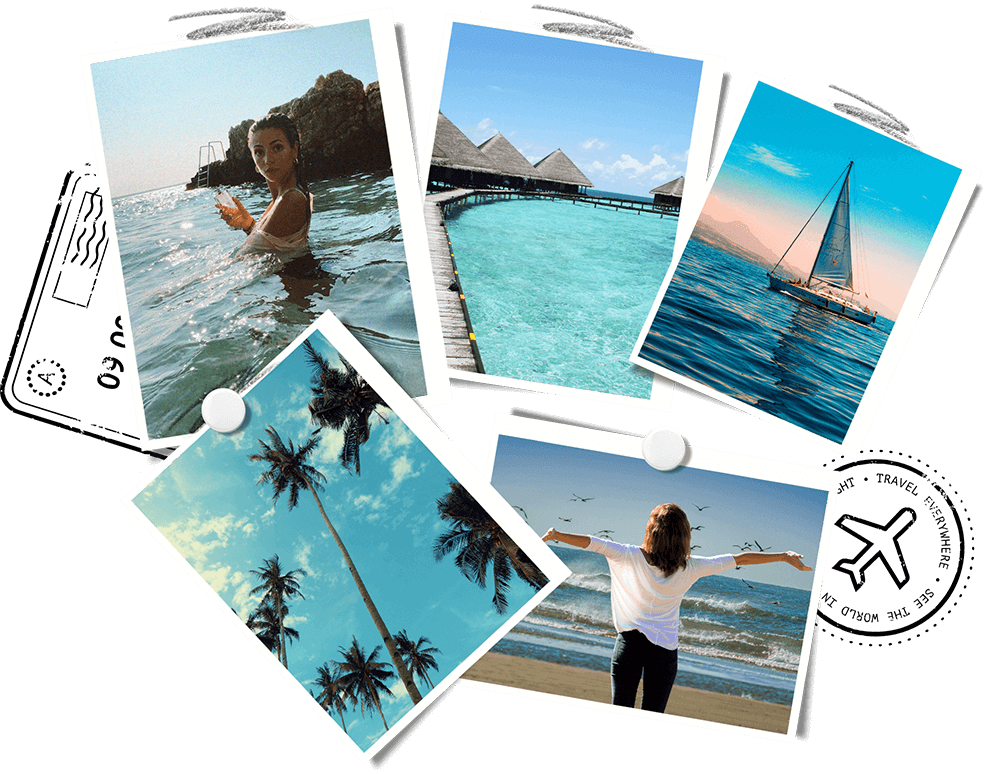
In travel since 2002, and in business since 2013, our travel team serves clients all over the US! Planning a vacation away from home takes a great team. We have taken the time to build a team of dedicated, smart, hard-working personnel who are each committed to excellence and service. We work side-by-side, creating and ensuring INCREDIBLE vacation experiences for you and your group. Our store front in-office team, and our travel consultant independent contractors, work all around the US.
In business since 2013, we are your #1 source for travel!
Free Vacation Package Quote